
Weddings at the 18th-Century Estate
In Valpolicella Classica, a historic residence suspended between art, wine, and romantic gardens
There are places that seem to have been waiting forever for the right moment to be filled with celebration
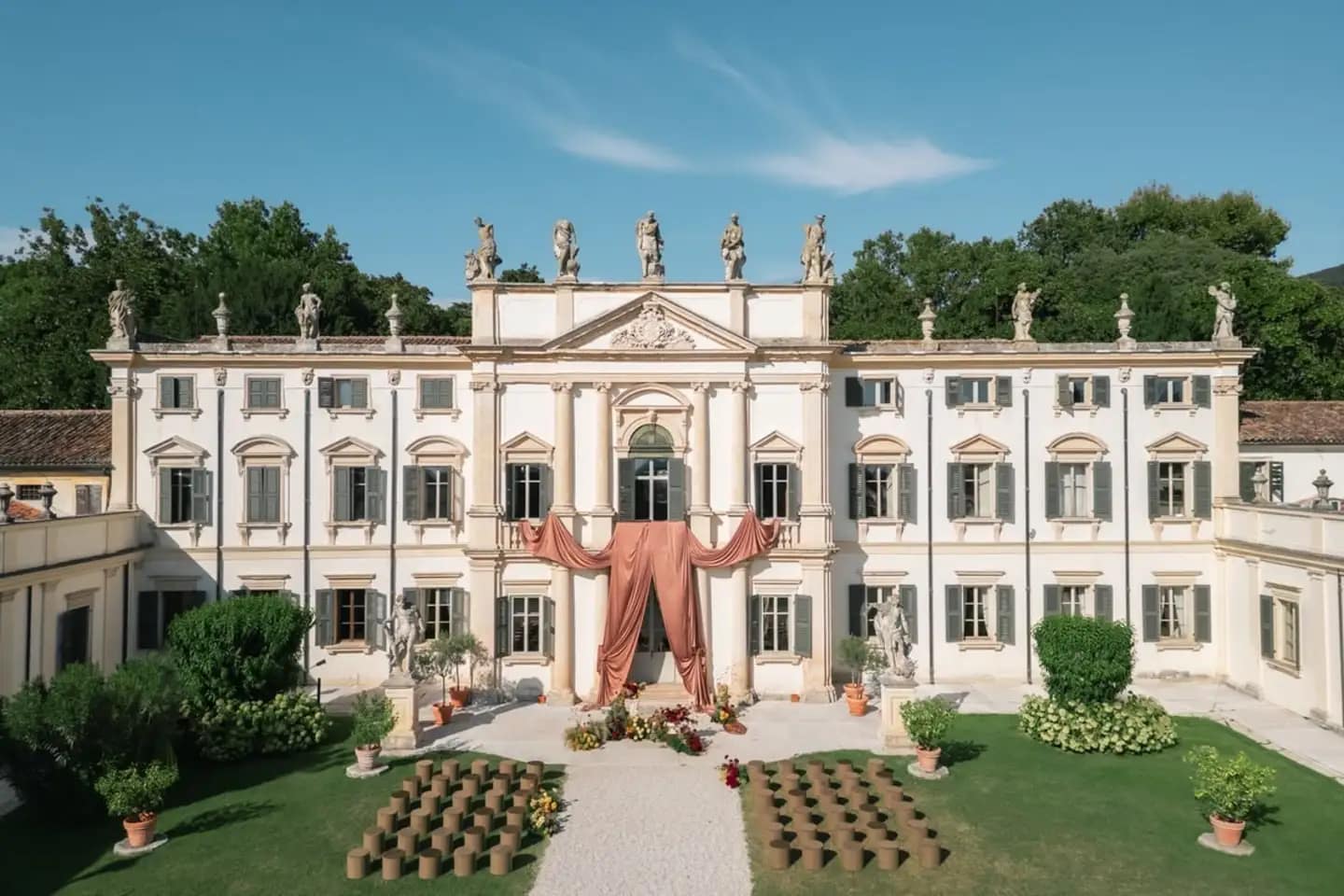
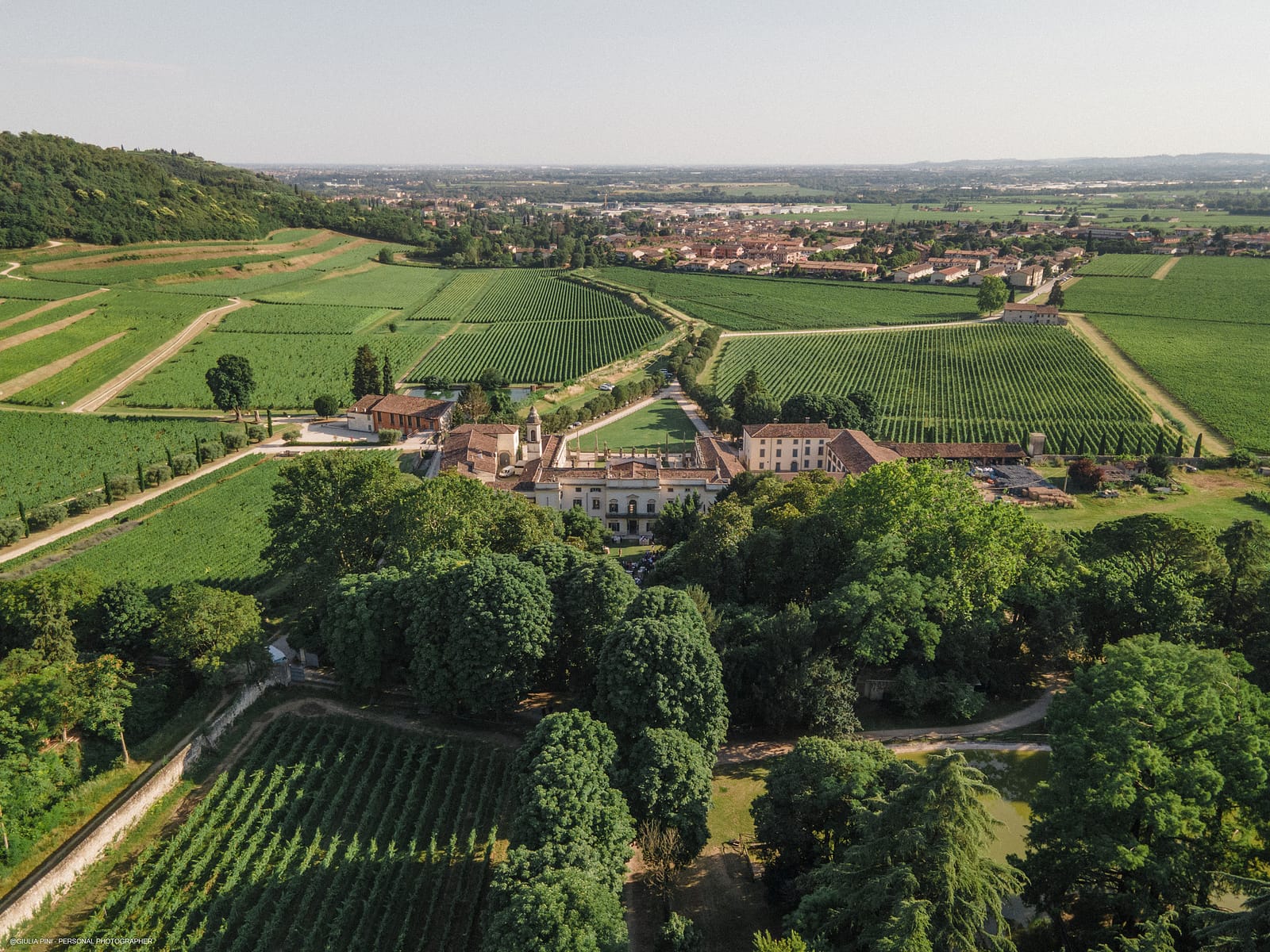
In the heart of Valpolicella Classica, just a short distance from the UNESCO city of Verona and Lake Garda, Tenuta Santa Maria di Gaetano Bertani is an 18th-century residence designed to welcome weddings and private events in a rare setting: a historic villa, romantic parkland, gardens, brolo, frescoed rooms, drying loft, vineyards, and monumental wine cellars.
It is an estate where Venetian architecture, the memory of wine, and the soft light of the hills create an atmosphere that is elegant, intimate, and quietly theatrical. Here, a wedding is not simply an event, but a day composed of lasting images: guests arriving through the greenery, the first glass at sunset, the breath of the frescoed rooms, the scent of the park, dinner, the cellars, the voices, the music, the night.
The estate belongs to a more hidden and coveted Italy: a world of guarded beauty, silent care, and landscapes made to become memory. It welcomes Italian and international guests who choose it for the character of its spaces, the authenticity of the setting, and the possibility of transforming a celebration into a private, cultured, deeply Italian experience.
An historic setting in Valpolicella for unforgettable weddings
Elegant spaces with centuries of character
The strength of Tenuta Santa Maria lies in its balance of grandeur and intimacy. It is a historic residence, yet still alive; a place of representation, but also a home to wine, land, and hospitality.
The villa, the brolo, the frescoed rooms, the park, the drying loft, the monumental cellars, and the vineyards are not simply spaces to be decorated. They are settings with voices of their own, able to accompany every moment of the day with naturalness, measure, and grace.
A wedding may begin amid the greenery, continue among frescoes and architecture, move through the story of wine, and close in the warm light of evening. Each scene changes its tone, yet everything remains held together by one atmosphere: intimate, elegant, memorable.
Beauty shaped by time and care
The appeal of the estate lives not only in its history, but in the way every detail seems to have been preserved. Stone, perspectives, gardens, vine rows, rooms, cellars, aged wood, and great historic barrels all speak of time, attention, and continuity.
It is beauty without ostentation, made of proportion, material, and light. For this reason, the estate lends itself to weddings of real distinction: intimate celebrations or large receptions, open-air dinners or more private moments in the rooms, private tastings, wine experiences, and hospitality designed for Italian and international guests.
Not a neutral venue. A residence to inhabit for a day.
Architecture, Statues, and 18th-Century Scenography
The Mark of Adriano Cristofali
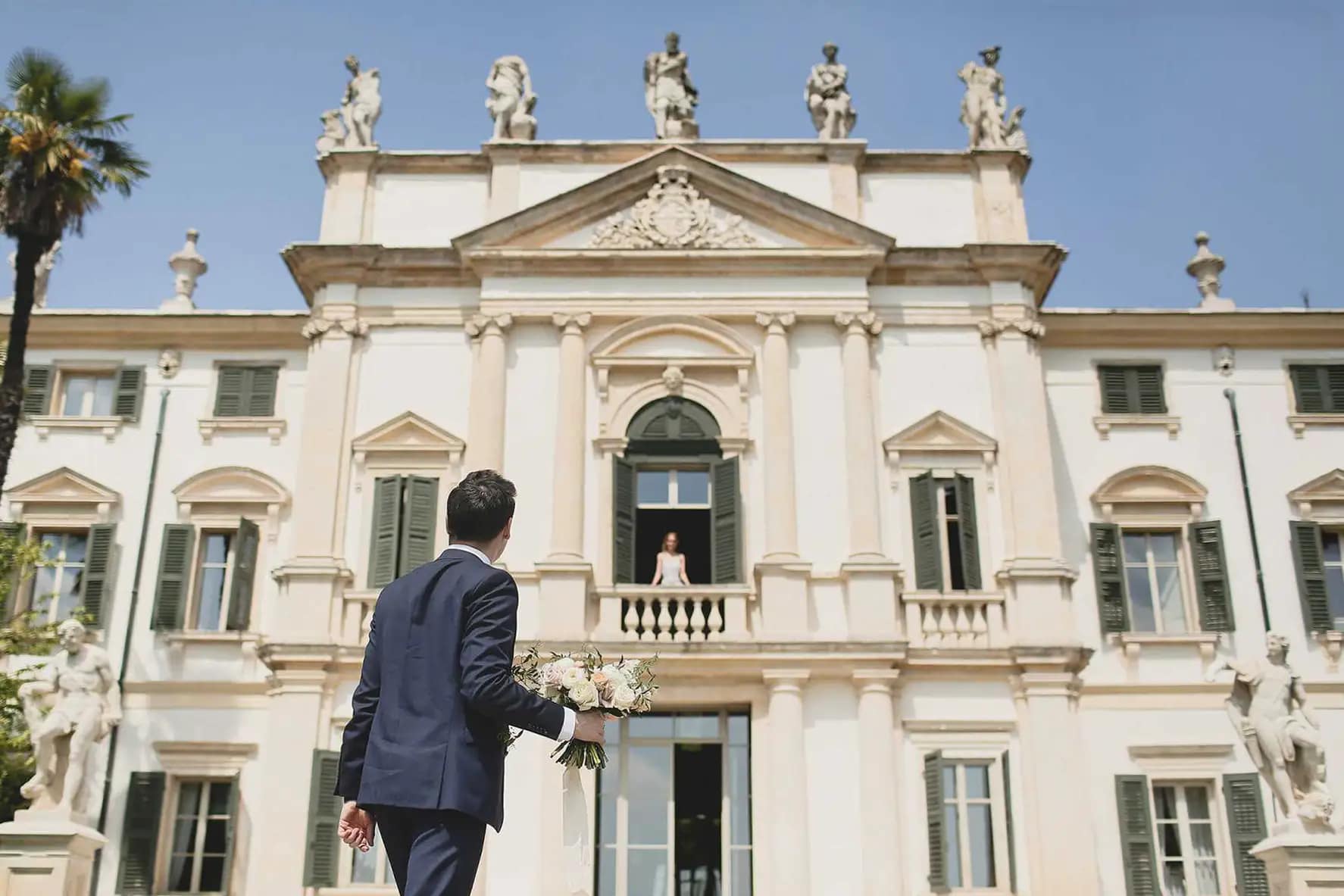
The construction of the complex —the central structure, chapel, and cellars— took place in the first half of the 18th century, based on a design by the Veronese architect Adriano Cristofali, completing a project initially entrusted to Lodovico Perini. The estate was built upon an earlier 16th-century residential core and interprets the idea of the Venetian villa as a place where residence, landscape, and agricultural production converse within a single design.
It is this harmony that makes the estate so evocative for a wedding: not an isolated palace, but a complete world, conceived to welcome life, ceremony, beauty, and landscape.
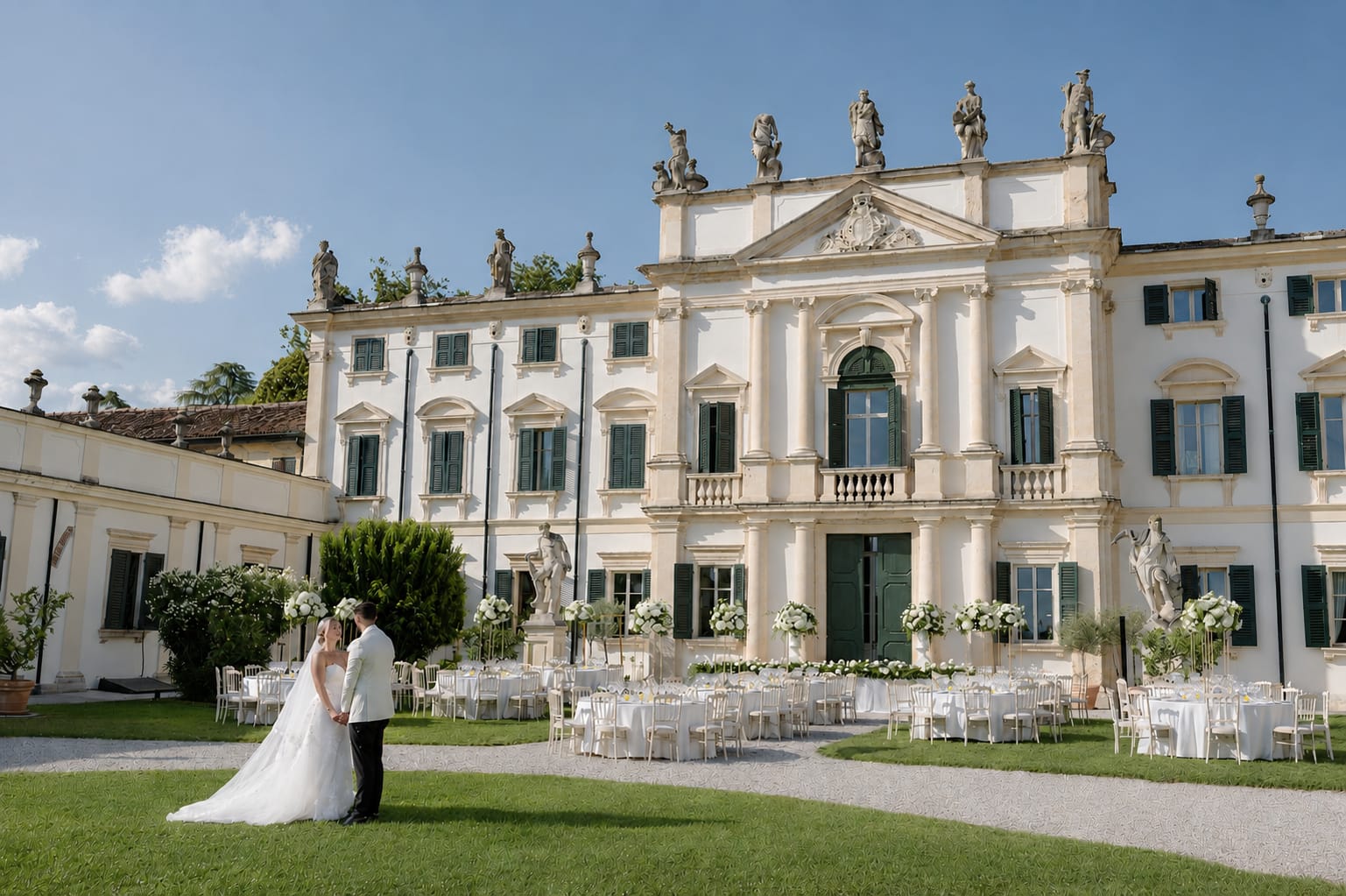
The facade, the side wings, the chapel, and the entrances to the rustic buildings and cellars create a scene of great balance. Nothing feels accidental: everything guides the eye, as in a natural stage setting.
The Statues and the Presence of Myth
The statues that inhabit the estate —integrated into the architecture, positioned along the wings, on the roofline, and throughout the gardens— add a mythological and theatrical note to the composition.
The garden statues are attributed to the sculptor Lorenzo Muttoni. Their presence is not merely decorative: they accompany the perspectives, keep watch over the paths, and give the place a narrative quality.
For a wedding, these elements become silent presences: they frame the arrival of guests, add depth to photographs, and transform every passage into a fragment of narrative.
The Salon of the Muses
A light-filled room of theatrical proportions
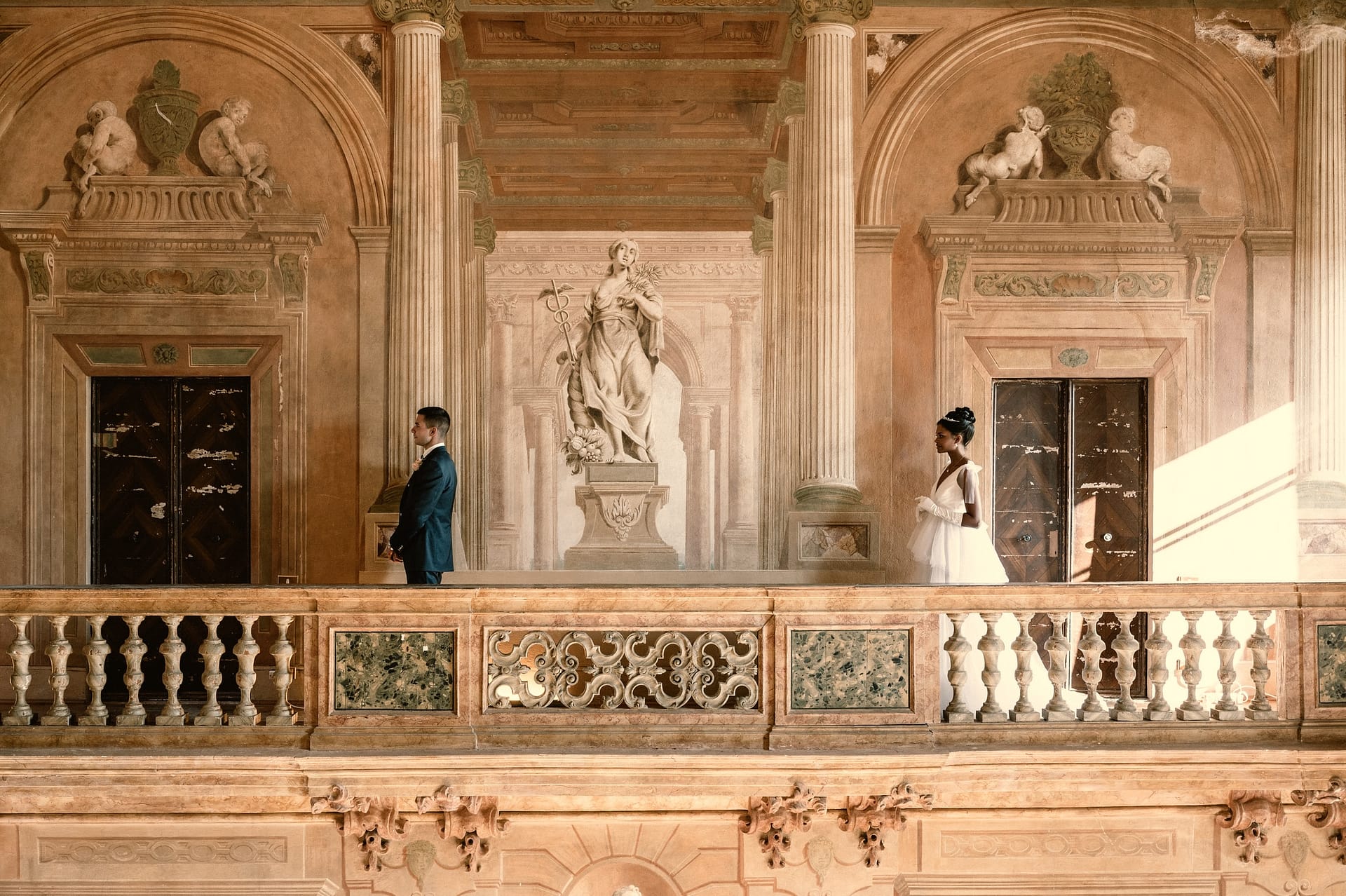
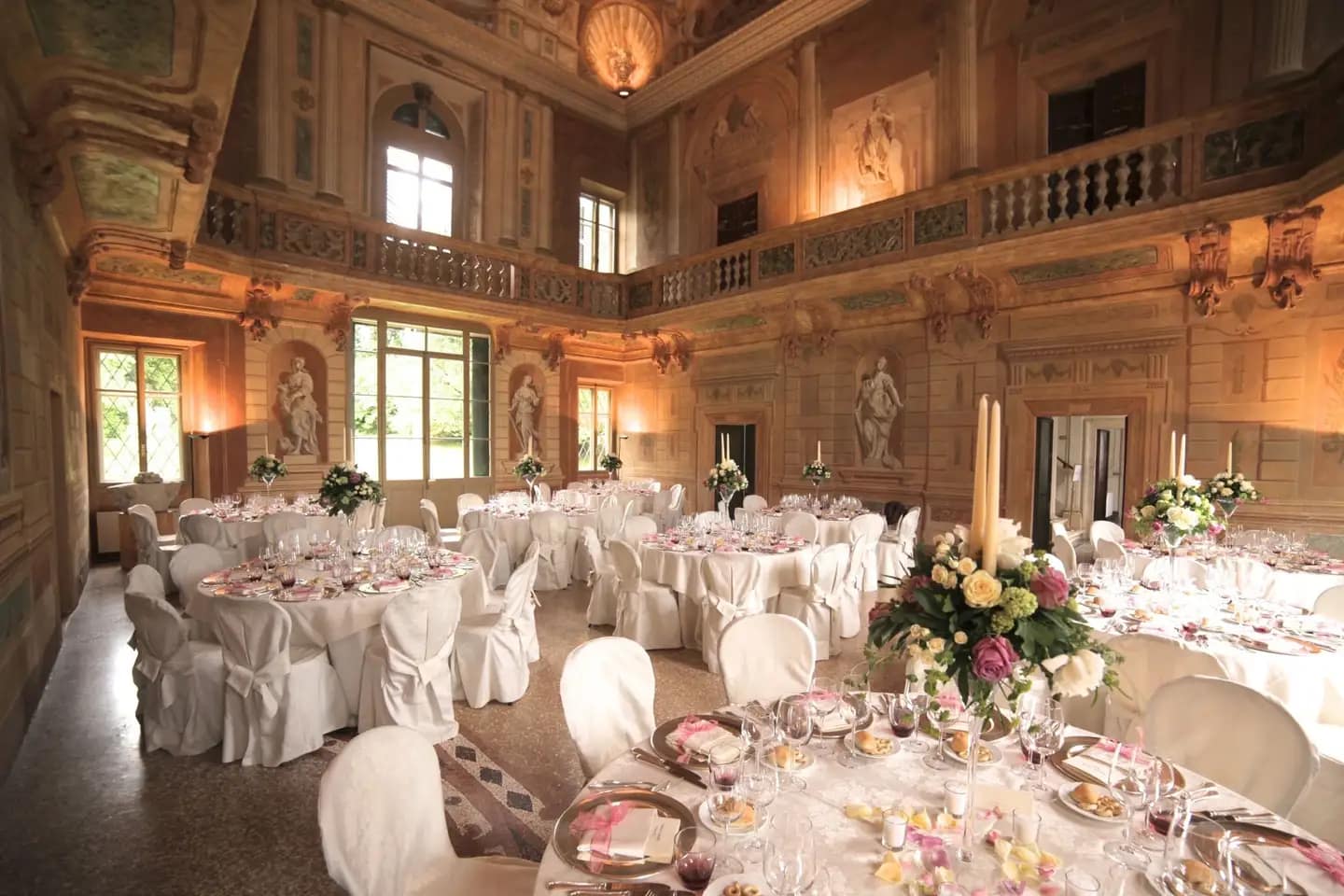
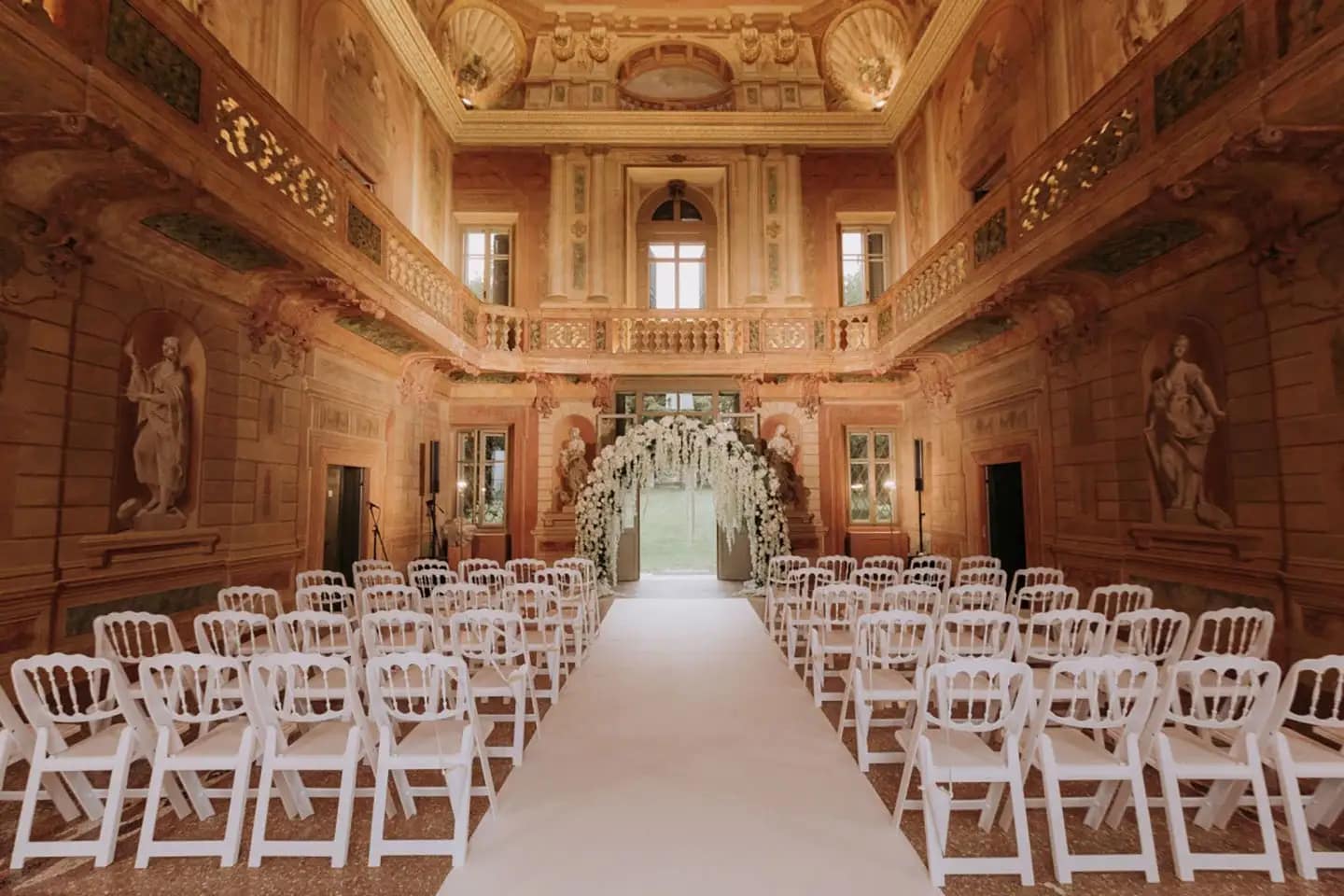
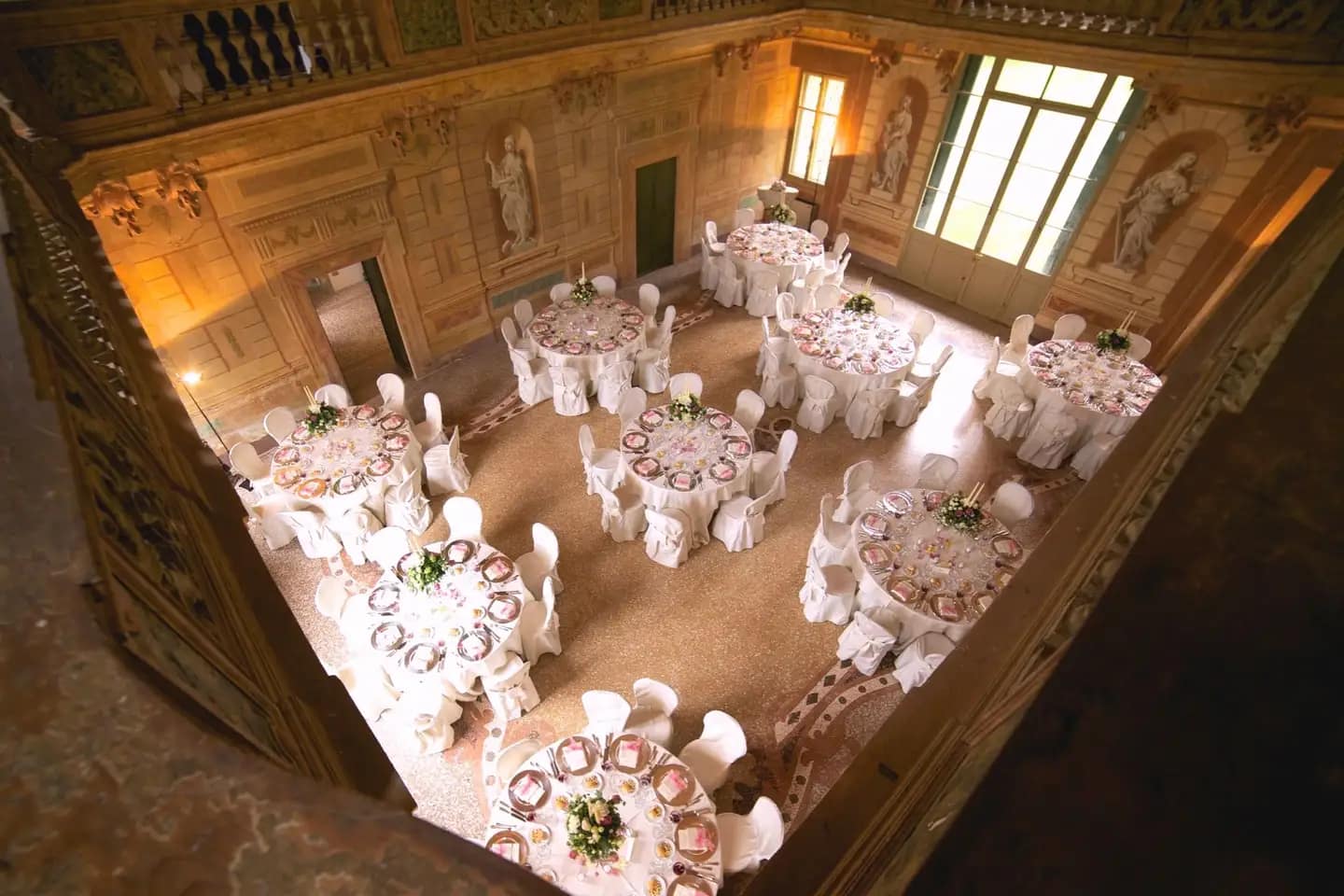
The Salon of the Muses is one of the most captivating rooms of the estate. It rises through three stories and is divided by a painted wooden balustrade that creates two overlapping registers.
It is a room conceived to astonish with elegance: painting amplifies the architecture, opens perspectives, multiplies the light, and turns the interior into a suspended stage.
The hall once hosted small performances of Opera Buffa and, later, Opera Seria. This theatrical memory still remains in the atmosphere: even today, the space seems prepared for ritual, anticipation, and appearance.
For a wedding, it is the place of measured wonder: an interior capable of welcoming solemnity without making it rigid, and beauty without making it remote.
The Muses, Flora, and the Seasons
In the painted niches of the Hall are the Muses of the Arts: Architecture, Sculpture, Painting, Geometry, Astronomy, and Music. The upper register opens into fantastical trompe-l’oeil architectures, while allegorical figures, satyrs, and references to the seasons create a visual narrative connected to time, nature, and the agricultural world.
The ceiling is dominated by the theme of the four seasons: Flora at the center, Spring and Summer on one side, Autumn and Winter on the other. It is a painting that speaks of cycles, waiting, light, and ripening – themes that belong to wine, but also to a wedding.
The frescoes are attributed to Emilian artists active in Verona, including Prospero Pesci, a quadratura painter, and Giuseppe Valliani, known as Il Pistoiese, author of the central ceiling fresco.
In this hall, the celebration takes on an almost symbolic dimension: love placed within time, the feast guarded by the arts, beauty as a promise of continuity.
The Romantic landscape garden, A place where time slows
Pindemonte, Bacon and the garden as a pleasure of the soul
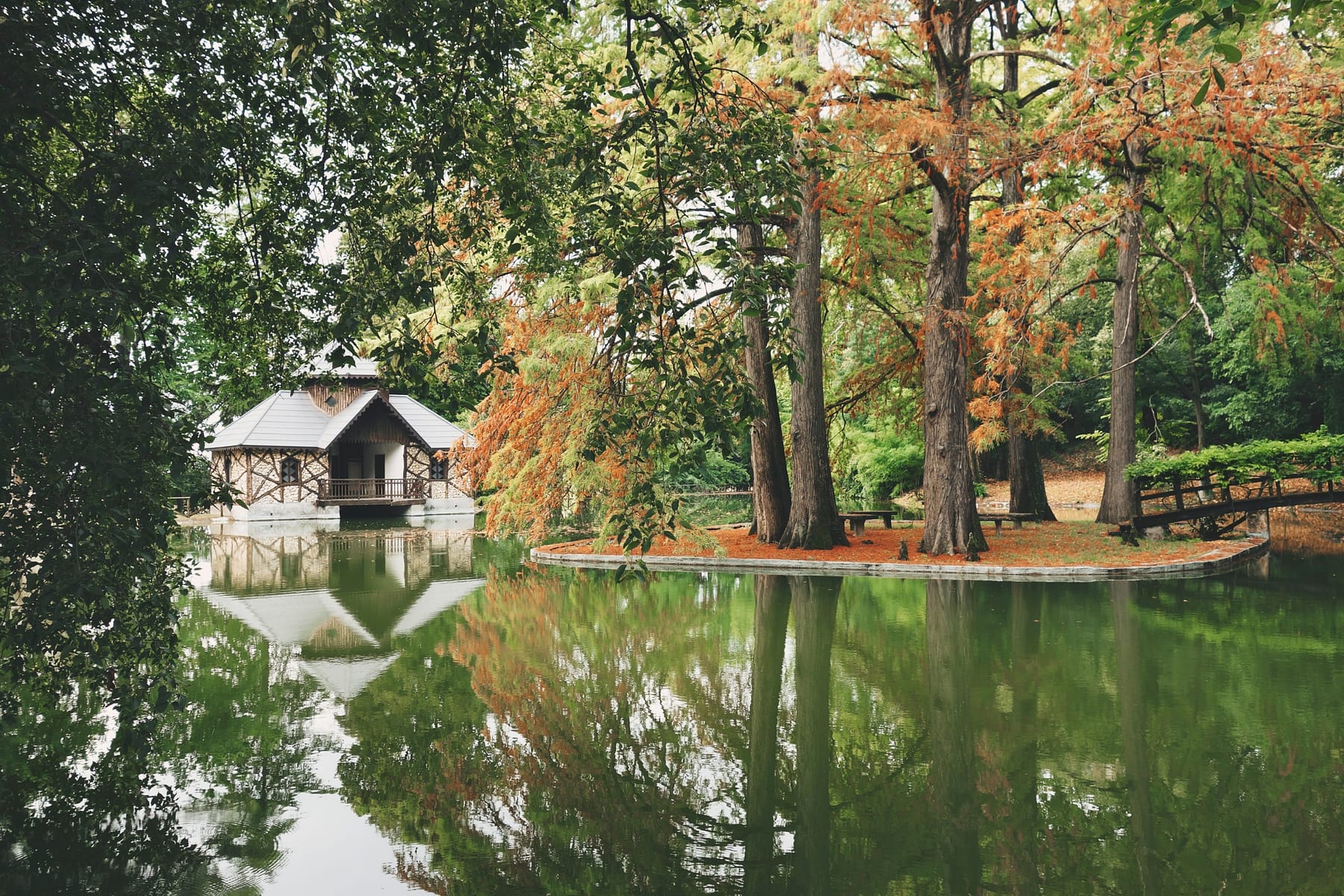
The estate park is one of the places where the atmosphere becomes most intimate. Toward the end of the 18th century, the taste for the English garden spread to Verona as well: no longer only geometric order, but landscape, surprise, walking, shade, clearings, water, exotic trees, and secluded corners.
The estate park belongs to this romantic sensibility, with its spring-fed lake, small island, wooden bridge, woodland, chalet, and places created for reading, conversation, and repose. Its design was also influenced by Ippolito Pindemonte, who introduced suggestions of English origin.
In Pindemonte’s thought and in the tradition of the romantic garden, one also hears the echo of Francis Bacon: the garden as one of the purest pleasures of the soul, a place where nature is not merely ornament, but inner experience.
That thought still seems to belong to this place. The park is not only greenery: it is breath, interval, suspension. It is the space where guests move without hurry and the wedding unfolds in a softer dimension.
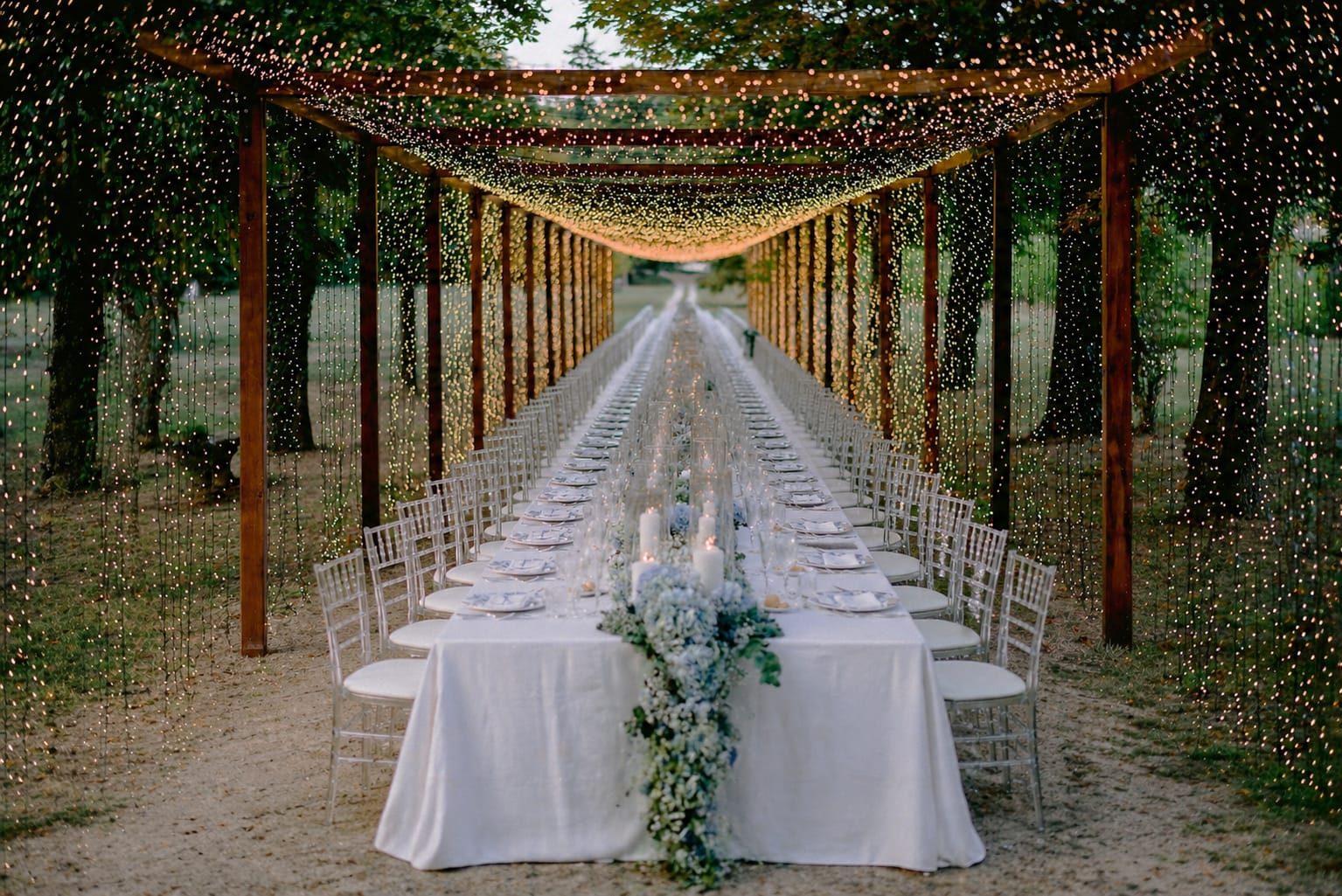
A landscape that moves from anticipation to celebration
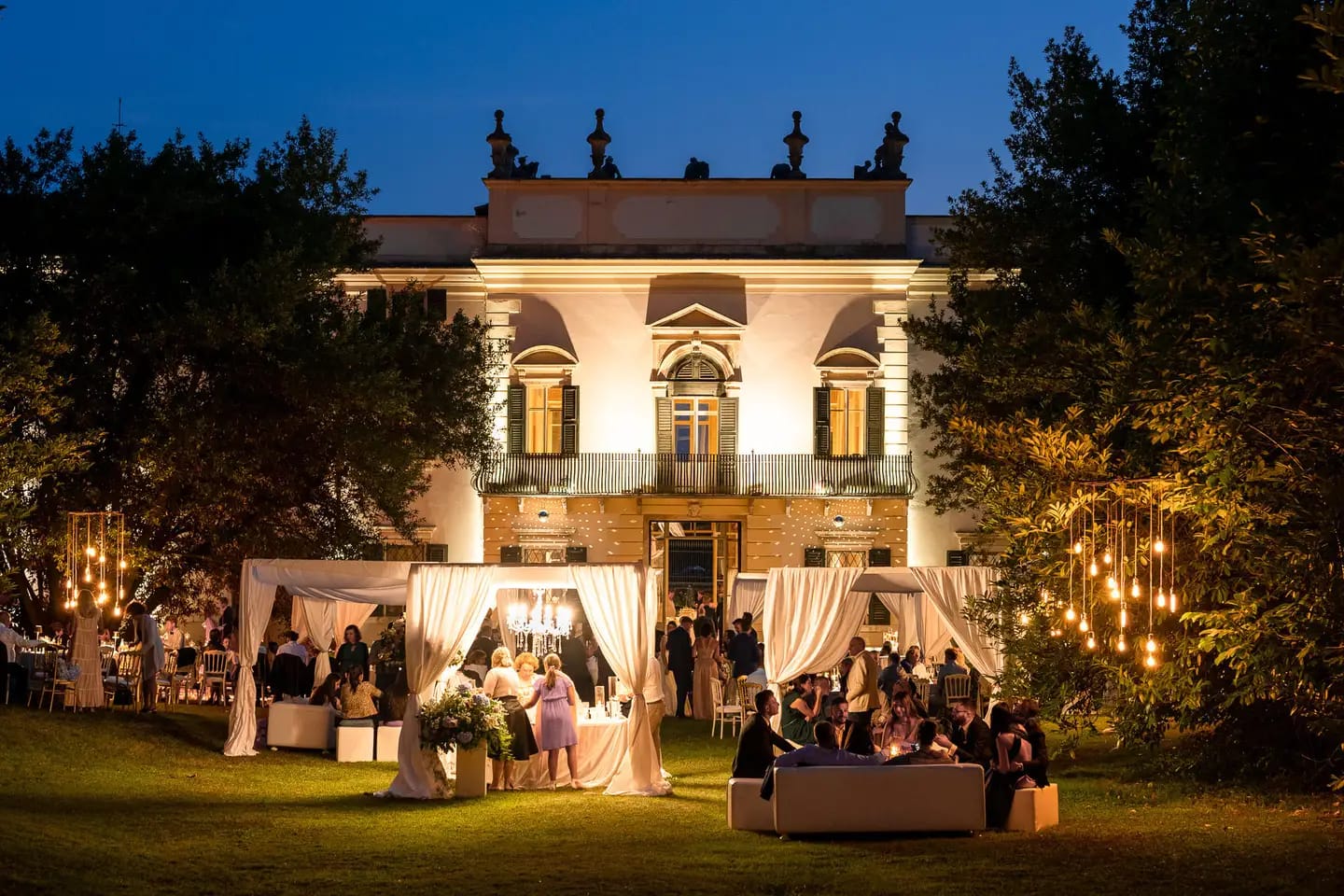
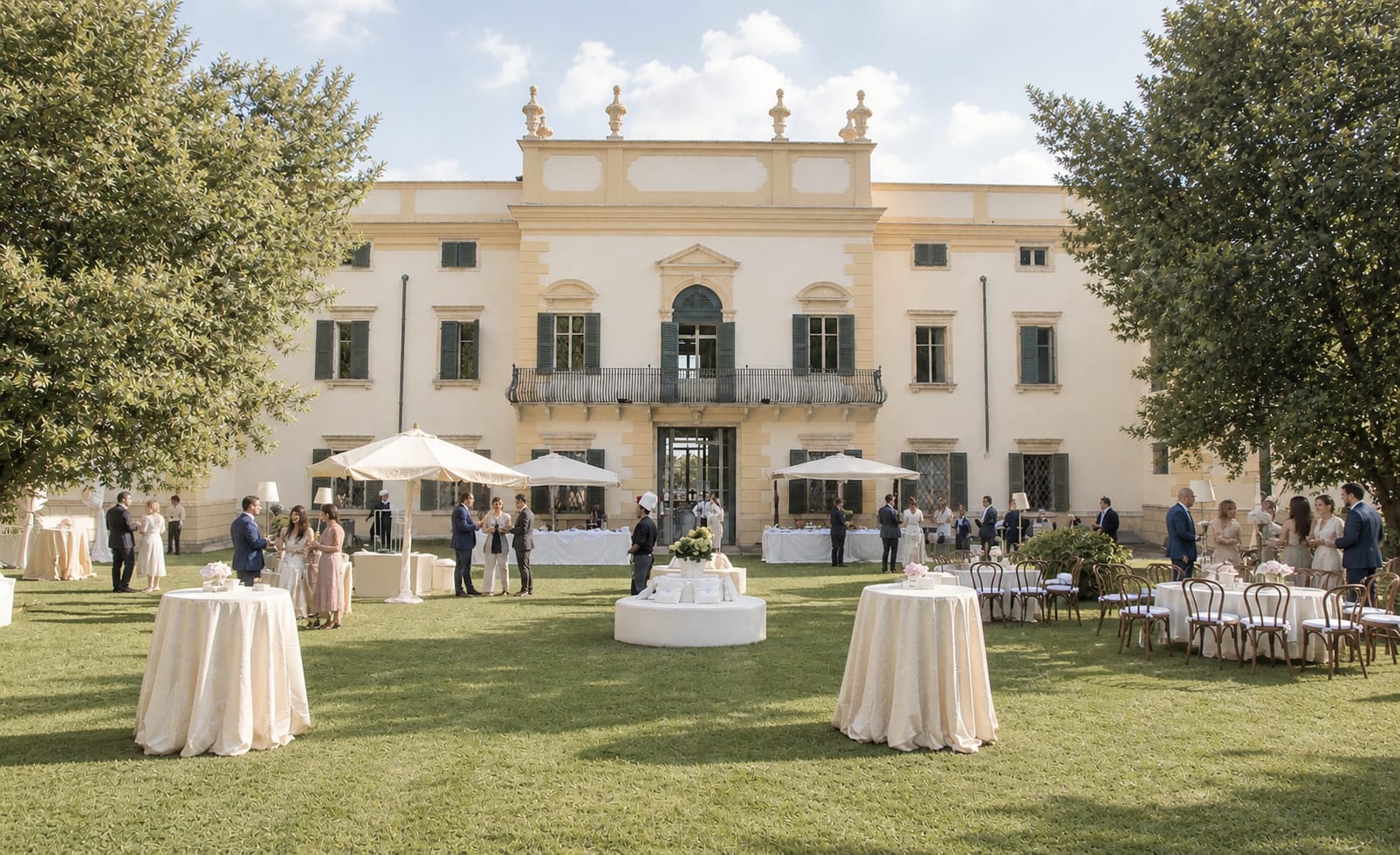
The park is perfect for moments that need air and light: the arrival of guests, a symbolic ceremony, an aperitivo among the trees, a walk for the couple, a musical moment, the cake cutting, a summer evening slowly descending over the estate.
The greenery welcomes, the lake reflects, the architecture appears through the trees, voices lower, the light changes. It is an almost cinematic landscape, where magic is not created by special effects, but by the precision of details: the right sound, the right light, the slow pace of the guests, the scent of the garden.
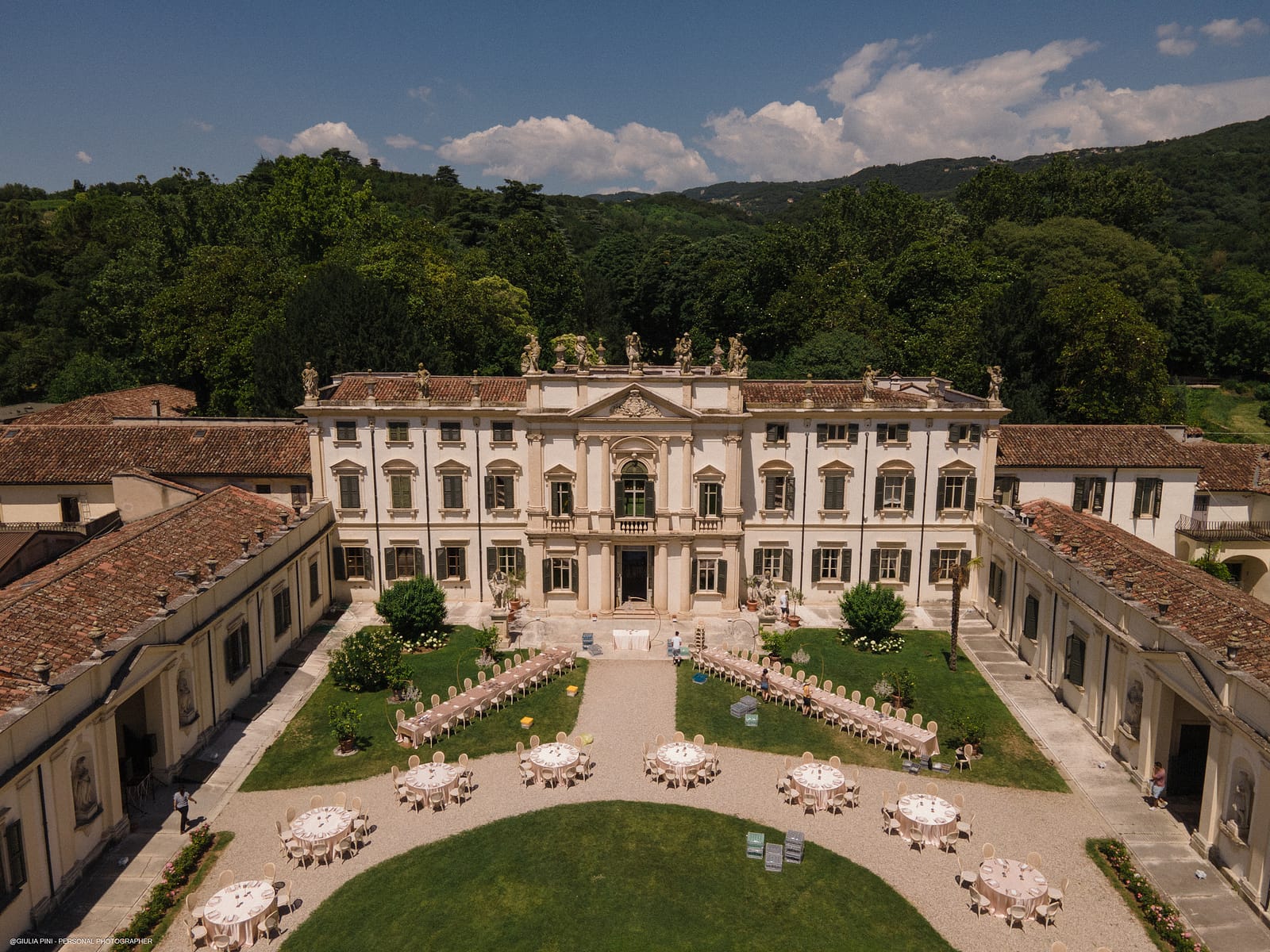
An estate long admired by poets and artists
The romantic salon and literary memory
The estate belongs to a history that is not only agricultural or architectural. It has also been a place of conversation, poetry, music, and romantic sensibility.
Here, the landscape, the garden, the villa, and the wine have inspired poets, artists, and discerning travelers. The memory of Ippolito Pindemonte gives the estate a more intimate tone: not only a place of retreat, but a space of the soul, of reading, encounter, and contemplation.
The park itself, with its views and secluded places, also influenced the vision of later artists, including the Veronese painter Angelo Dall’Oca Bianca.
The Brolo dei Poeti
The Brolo dei Poeti gathers this heritage into a name that is already a story. It is a secluded, evocative space tied to the vineyard landscape and to the literary memory of the estate.
Here, a wedding may take on a more intimate, almost secret dimension: a sunset aperitivo, a symbolic ceremony, a photographic moment, a toast among the vines and history.
In this setting, Valpolicella is not simply a backdrop. It is living matter: landscape, culture, wine, anticipation.
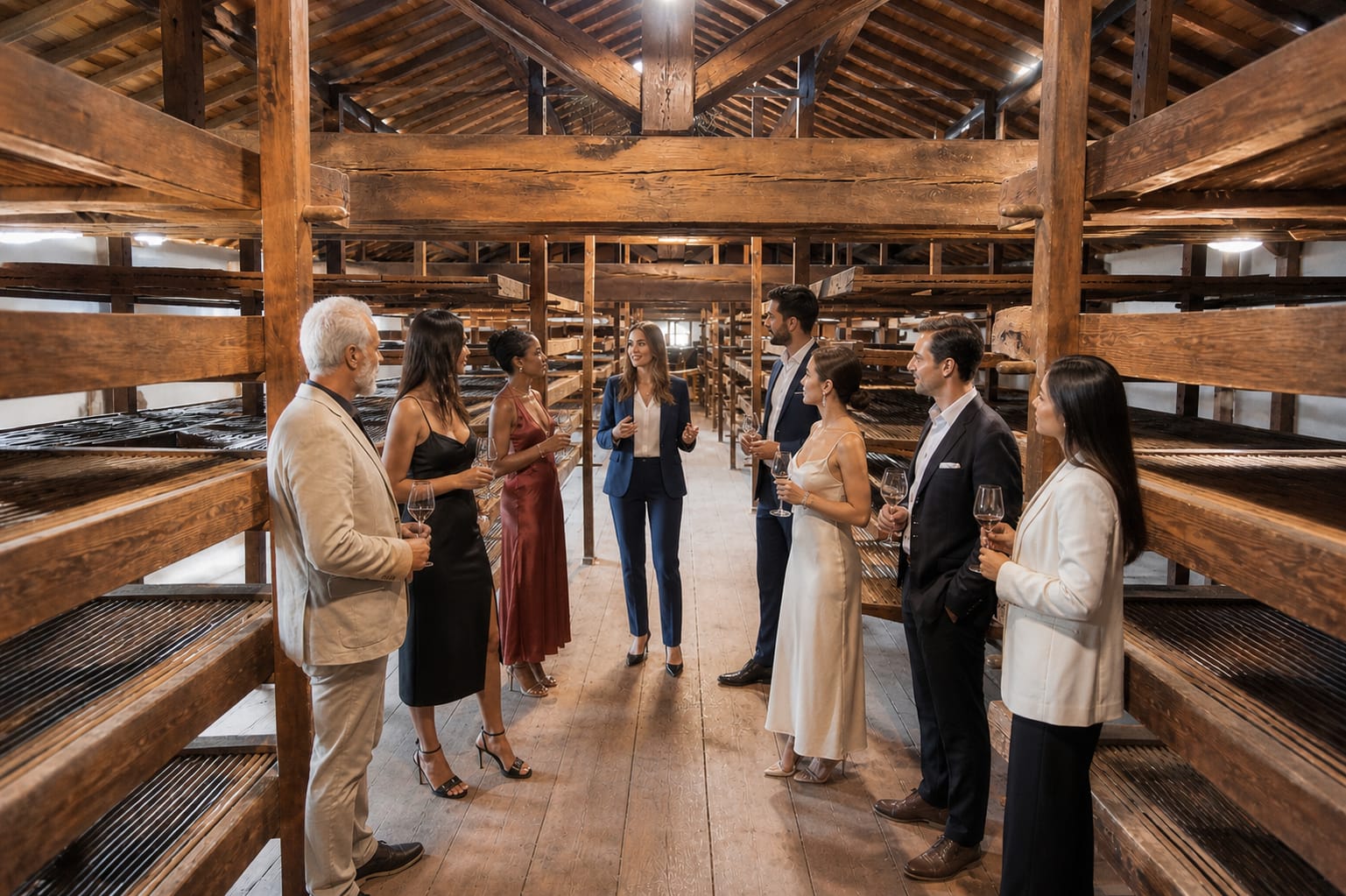
Valpolicella, wine and the rite of appassimento
The drying room and the culture of waiting
The estate preserves one of Valpolicella’s most distinctive traditions: the rite of appassimento.
In the drying room, grapes are not simply stored. They are left to rest, transform, concentrate aromas, sugars and memory. It is a slow gesture, made of care and knowledge, in which time becomes matter.
The rite of laying Valpolicella grapes to rest has been submitted to UNESCO as an Italian candidacy for Intangible Cultural Heritage, recognizing its value as a practice rooted in the Veronese hills and passed down through shared gestures and knowledge.
For a wedding, this story adds depth. Guests encounter not only a beautiful place, but a culture, a tradition, a way of understanding time.
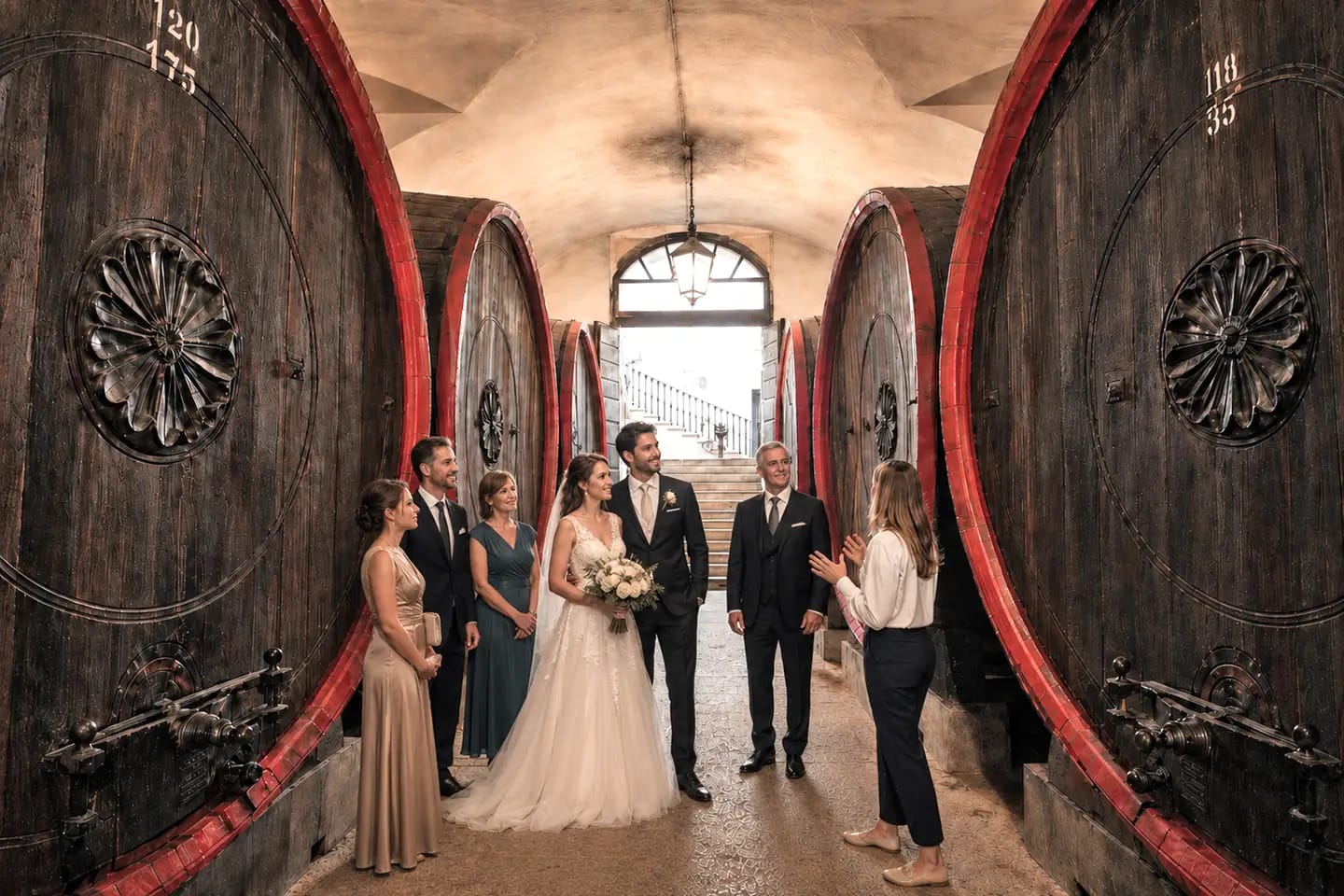
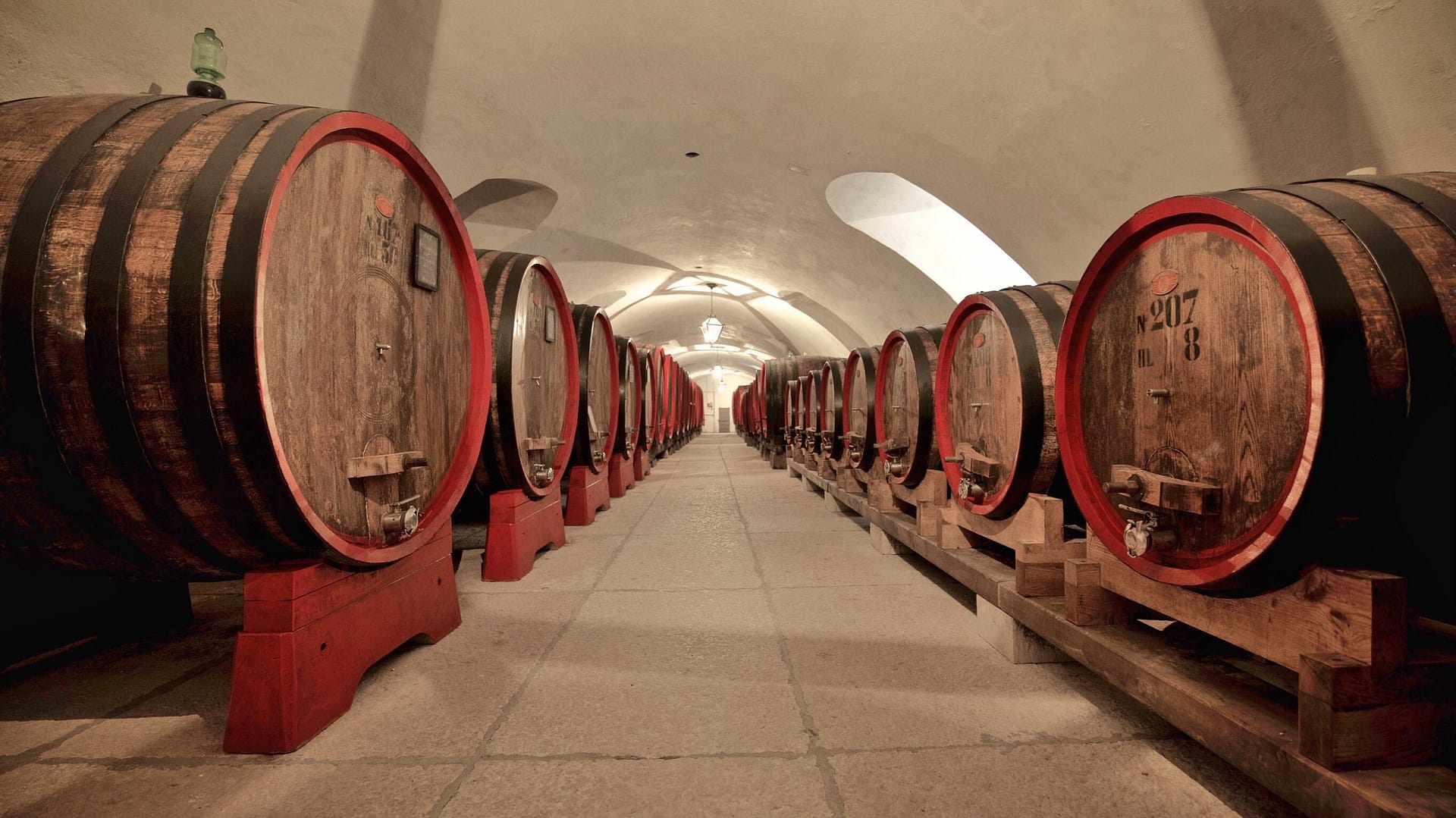
The monumental cellars
The monumental cellars are the deepest heart of the estate.
After the light of the gardens and the grace of the rooms, entering the cellars means changing rhythm: stone, wood, half-light, casks, silence. Here, the wedding meets the most ancient memory of wine, preserved in imposing spaces and in historic casks over 200 years old.
It is a setting of great emotional power: not decoration, but living matter. The large casks, the passages, the vaulted spaces and the depth of the rooms tell of a tradition still present, able to give the day a rare, solemn and intensely Veronese note.
The cellars can host private visits, tastings, reserved toasts or experiential moments designed for guests. Here, wine is not accessory. It is an essential part of the celebration.
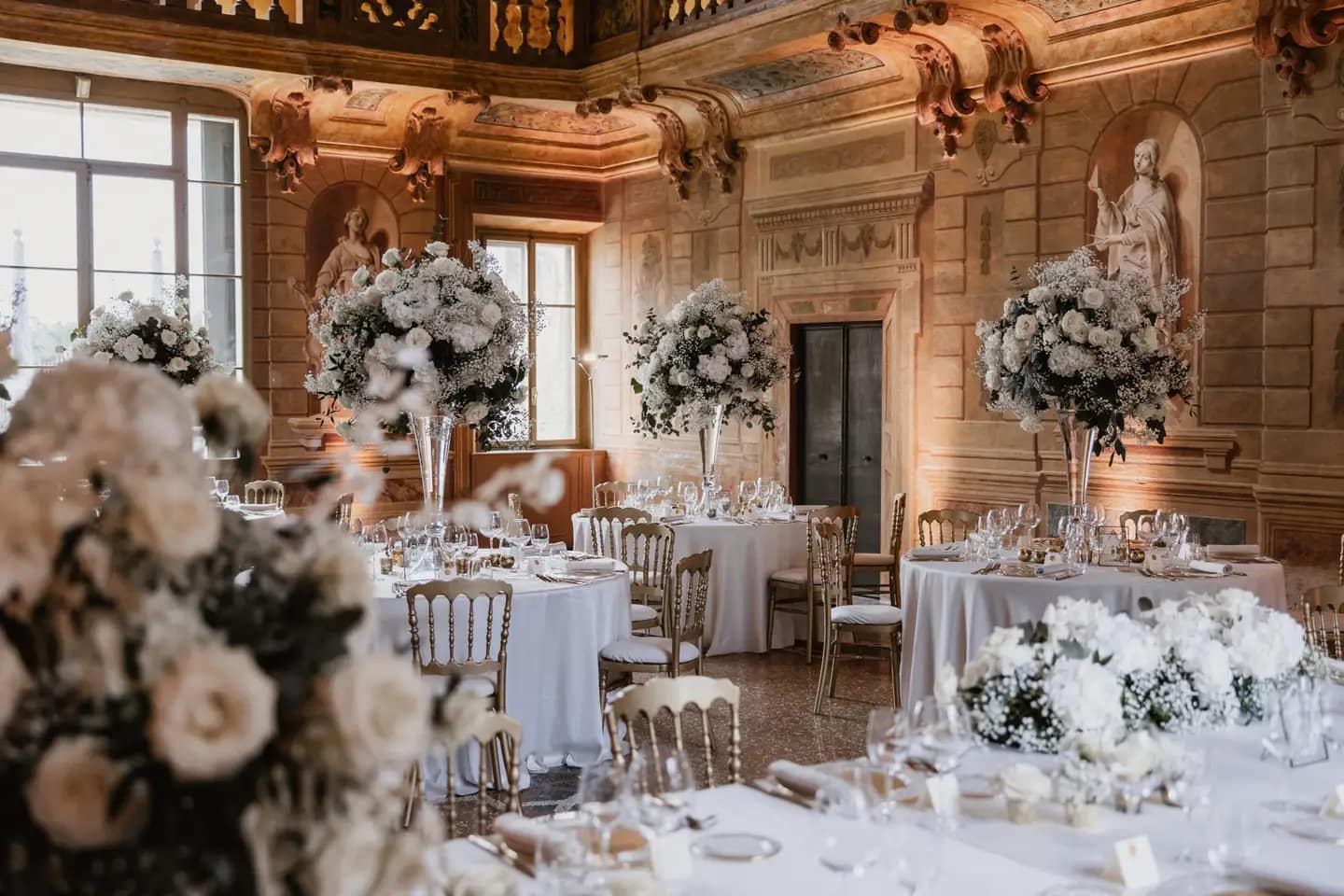
A day in several scenes
From guest arrival to dinner
A wedding at the 18th-Century Estate can be conceived as a day in several scenes, each with its own tone: the arrival in the courtyard or gardens, the welcome drink in the greenery, photographs among the villa, park, and vineyards, the passage through the frescoed rooms, dinner, a visit to the monumental cellars, dessert, and the music of the evening.
The estate can host weddings and receptions for more than 250 guests, with the possibility of creating a complete celebration according to the chosen format and the configuration of the spaces.
True elegance lies in rhythm: alternating fullness and pause, light and shadow, conviviality and intimacy. Allowing the day to breathe.
The luxury of restraint
The care of a wedding in a place like this does not consist in adding too much. It consists in choosing well.
Flowers capable of conversing with the frescoes. Tables that respect the material character of the rooms. Soft lighting, never intrusive. Music that accompanies without dominating. Service that is attentive, discreet, precise. An event flow capable of making everything feel natural.
It is beauty made of gestures: the fold of a napkin, the glass set down, the scent of greenery after sunset, a door opening onto an illuminated room. This is the rarest charm: class that never needs to announce itself.
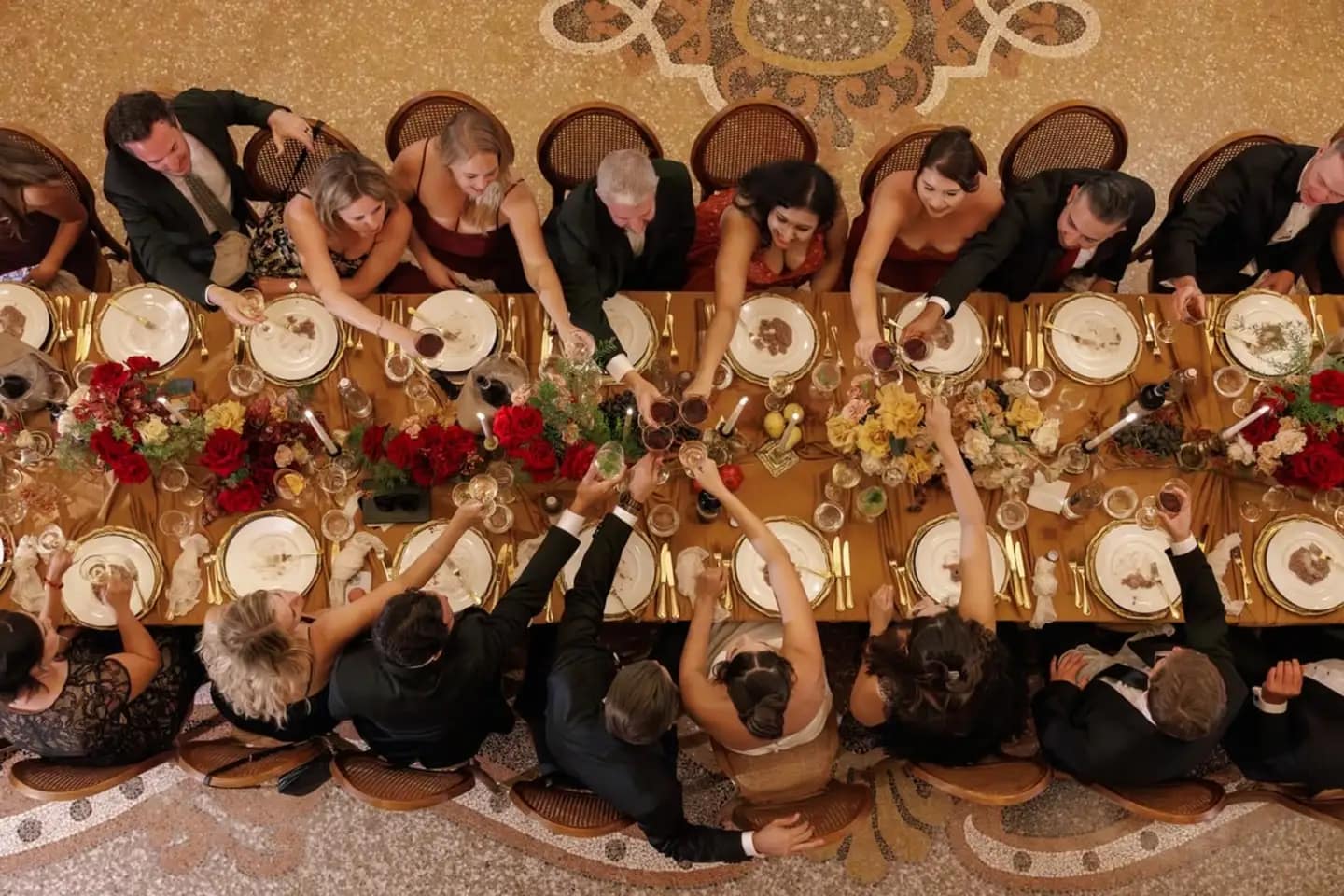
Tailored Direction for Italian and International Events
From Local Cuisine to the Chefs of Fine Dining
A wedding at the 18th-Century Estate takes shape like a discreet orchestration, where every element must converse with the character of the place.
The estate works with a selected network of caterers, chefs, florists, set designers, musicians, performers, photographers, videographers, technicians and wedding planners able to interpret different wishes, cultures and sensibilities.
The gastronomic experience may move from traditional local cuisine – rooted in seasonal ingredients, Veronese recipes, the flavours of Valpolicella and Venetian memory – to the most refined interpretations of haute cuisine, with high-profile catering and chefs connected to the world of Michelin-starred dining.
For Italian couples, this means creating a day rooted in place, yet able to speak a contemporary language. For international guests, it means experiencing authentic Italy, curated in every detail: from dinner to mise en place, from wine pairing to flowers, from lighting to music, from welcome to the rhythm of the evening.
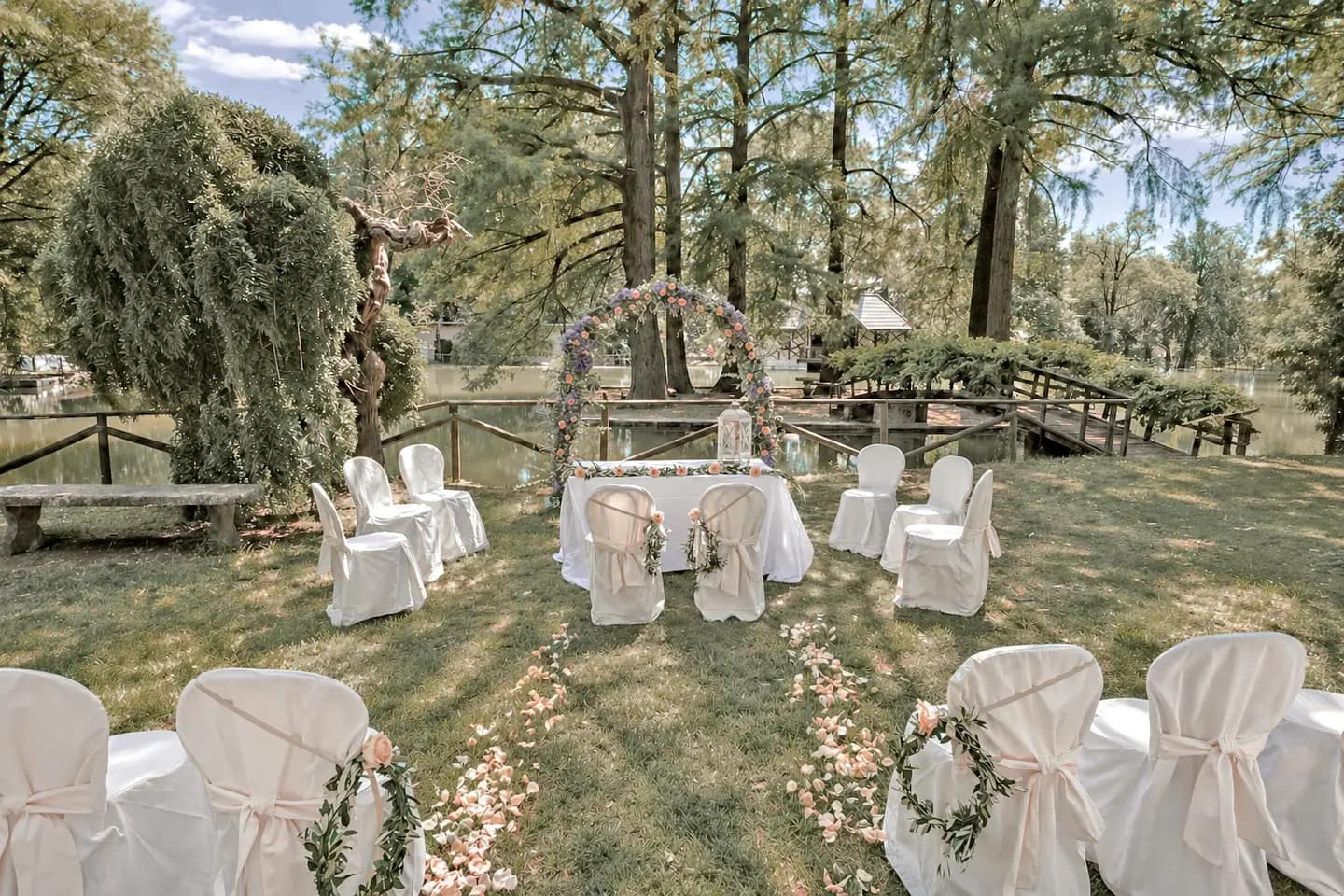
Flowers, styling, music and international wedding planners
Floral and scenic design is conceived to respect the soul of the estate: not to overwhelm it, but to amplify its grace.
Collaboration with leading florists, floral designers, and event designers makes it possible to create different atmospheres, always attuned to the place: romantic, classical, contemporary, natural, theatrical, or essential.
Flowers, lights, fabrics, tables, and decorative details become part of a shared language, where elegance is born from measure.
Entertainment can be designed with the same attention: live music, classical ensembles, contemporary performances, elegant DJ sets, theatrical moments, or experiences created to accompany the evening without interrupting its enchantment.
The estate also works with Italian and international wedding planners, capable of orchestrating every detail with precision, sensitivity, and vision: from the management of foreign guests to the choreography of the day, from arrival to dinner, from ceremony to celebration.
International guests and Italian hospitality
Tenuta Santa Maria welcomes international guests who choose the estate for its great charm, the uniqueness of its spaces, and the possibility of experiencing an Italy that is authentic, cultured, and beautifully staged.
For those arriving from abroad, the wedding can become a journey into the finest aspects of the territory: Verona, Valpolicella, Lake Garda, Amarone Classico, frescoed rooms, the romantic park, the monumental cellars, the drying loft, and Italian cuisine interpreted with care.
Guests do not remember only what happened. They remember how they felt: welcomed, surprised, immersed in a place where every element – wine, art, landscape, the table, music, sunset – seemed to belong to the same story.
The spaces of the estate
Historic rooms, gardens, frescoed halls, and spaces dedicated to wine
The spaces of the estate do not form a simple sequence of rooms and grounds, but a true story to move through.
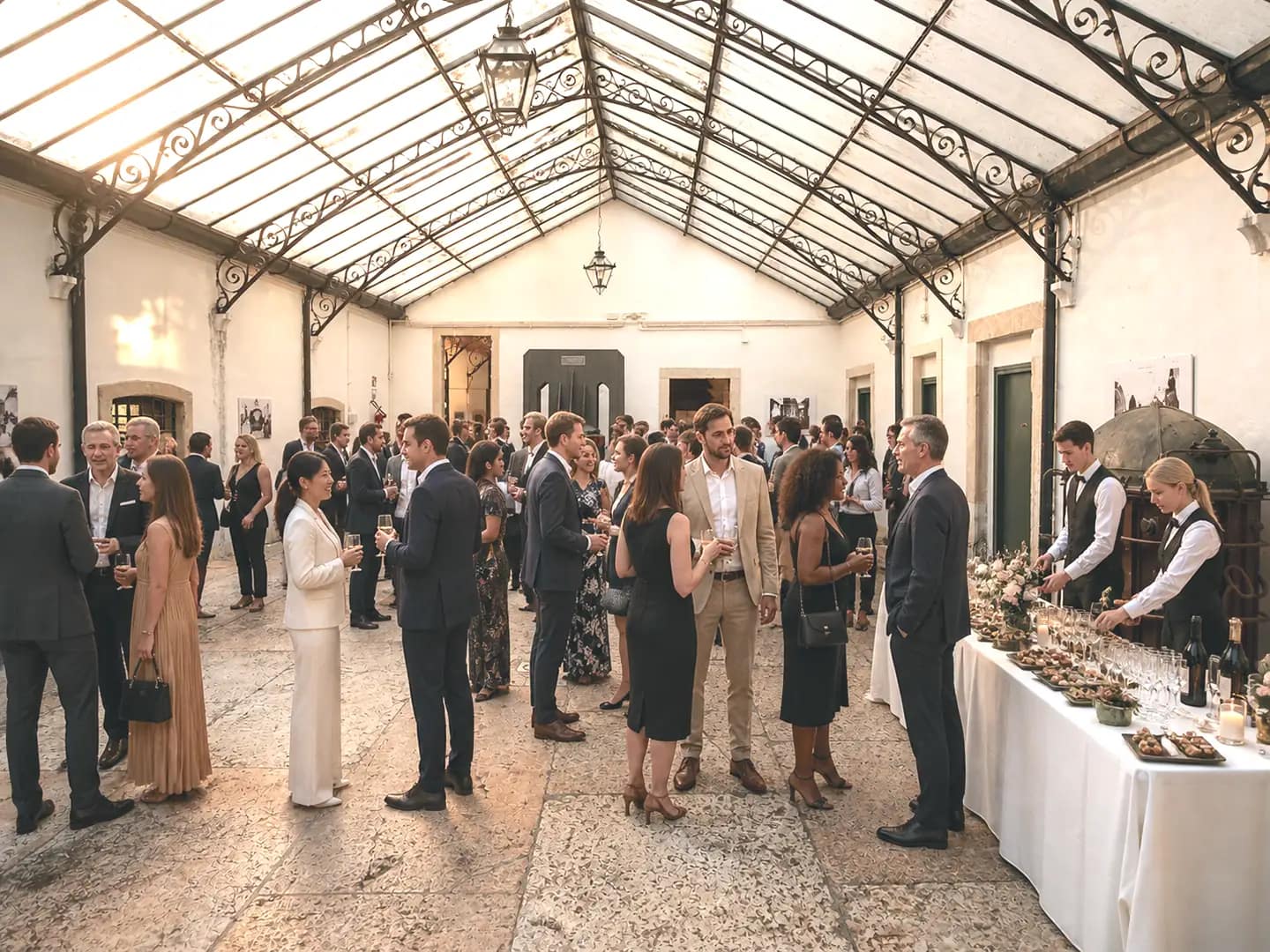
The courtyard introduces guests to a secluded world, where the perspectives of the villa, the side wings, the statues, and the 18th-century architecture naturally prepare the ritual of the day.
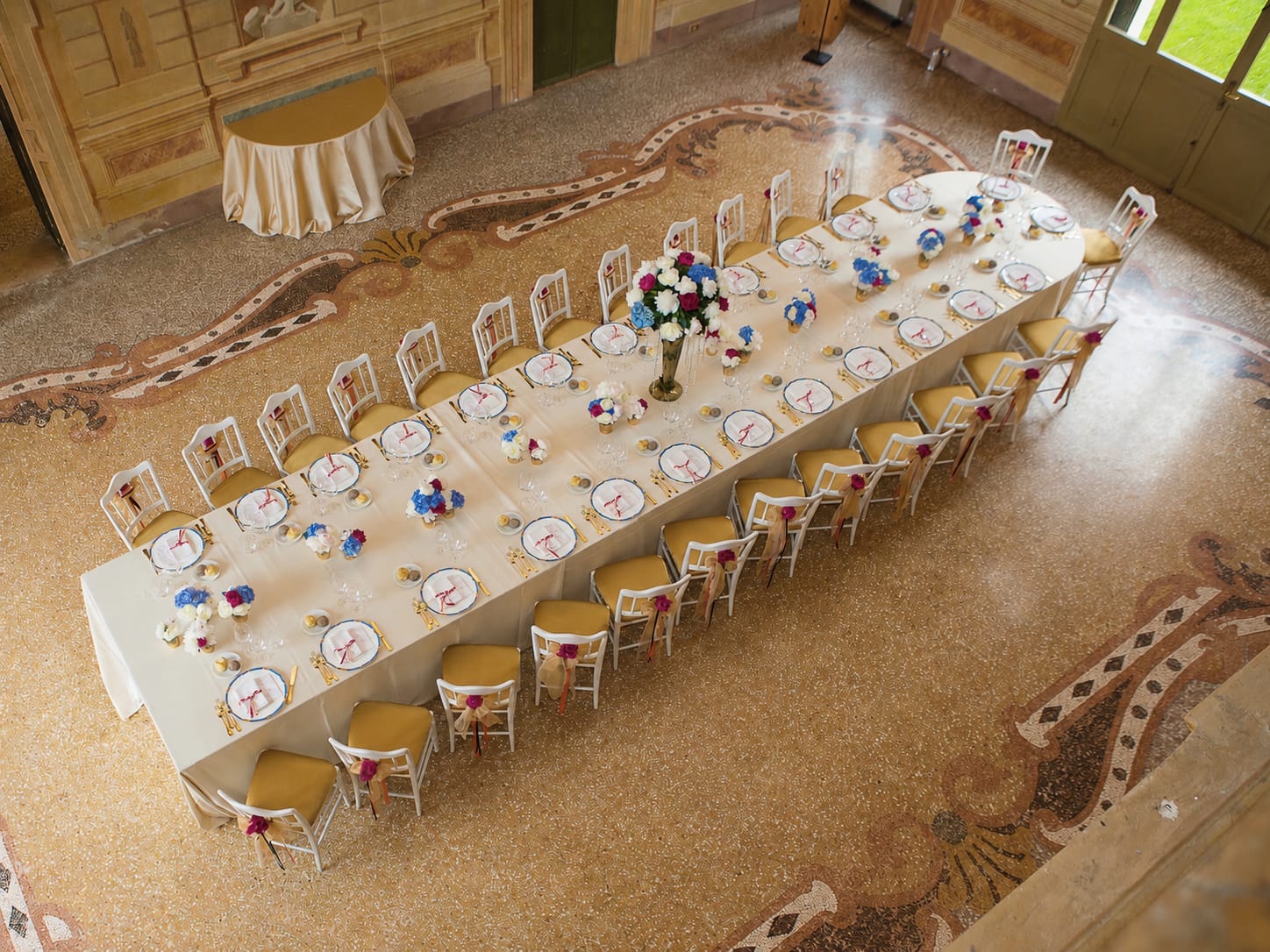
The frescoed rooms welcome the most refined moments of the wedding: dinners, toasts, photographs, intimate conversations. Flowers, crystal, glasses, linens, silver, and light enter into dialogue with the interiors and with the pictorial memory of the villa, turning the design into a gesture of restraint and elegance.
The Hall of the Muses, the artistic heart of the estate, adds a more scenic, almost theatrical dimension: with its painted perspectives, allegories of the arts and seasons, memory of musical performances, and luminous verticality, it becomes a space that surrounds and enchants.
Park, Brolo dei Poeti and vineyards
Outside, the gardens and romantic park open the day to light, movement, and anticipation.
They are ideal places for the arrival of guests, the symbolic ceremony, the aperitivo, photographs, the cake cutting, or a summer evening beneath the Valpolicella sky. The greenery, lake, views, shadows, and paths of the park create a soft, almost cinematic atmosphere, where time seems to slow.
The Brolo dei Poeti adds a more intimate and literary note: a secluded, evocative space where the celebration can become poetry, among vineyards, memory, and landscape.
The vineyards bring the most authentic breath of Valpolicella Classica into the wedding. They are not a mere background, but a living part of the estate: they tell of Amarone, the work of the Bertani family, the rhythm of the seasons, and the profound bond between land and wine.
Drying Loft and Monumental Cellars
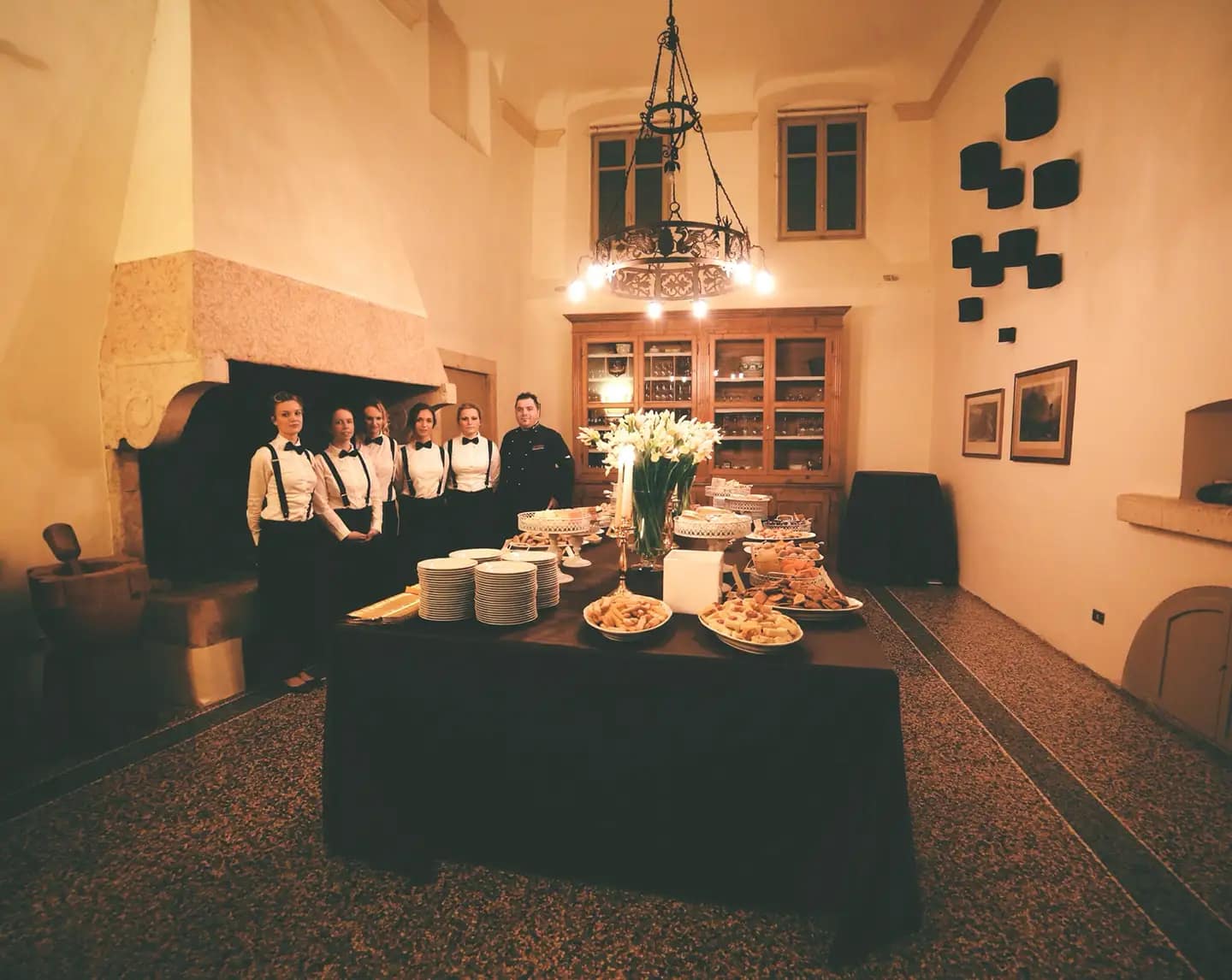
The drying loft introduces the dimension of waiting: grapes in appassimento, time, rest, transformation. It is a space charged with atmosphere and meaning, connected to one of Valpolicella’s most distinctive traditions.
The monumental cellars complete the story with a deeper, quieter note. To enter these rooms is to move through the history of wine: great volumes, barrels more than 200 years old, stone, wood, shadow, memory.
They are perfect spaces for creating a memorable experience for guests: not merely a visit, but a story within the story.
More than a setting, an estate to experience
The richness of the estate makes it possible to create a wedding that is fluid, elegant, and never static: a reception in the frescoed rooms, an aperitivo in the park, an open-air dinner, a cellar tasting, an evening celebration with soft lights and curated music.
The courtyard introduces. The rooms welcome. The Hall of the Muses enchants. The park suspends time. The Brolo dei Poeti draws inward. The vineyards open the landscape. The drying loft tells of waiting. The monumental cellars preserve memory.
Together, these places transform a wedding at the 18th-Century Estate into a complete experience: a journey through art, wine, Valpolicella, and the most authentic beauty of Italy.
The estate among the FAI Places of the Heart
A heritage loved, not only admired
The estate is listed among I Luoghi del Cuore del FAI – the Places of the Heart – the national campaign dedicated to Italian places that must not be forgotten, tied to memory, art, landscape, and the affection of communities.
It is an important detail, because it says something beyond beauty. A place of the heart is not simply an architectural asset: it is a place people recognize, remember, and wish to protect.
For a wedding, this means celebrating in a space that belongs not only to the history of art and wine, but also to a shared memory.
A beauty that remains
There are venues that work for a single day. And there are places that continue to live in memory.
The estate belongs to this second category, because it brings together what is rarely found in one place: 18th-century architecture, painting, statues, romantic gardens, literary salon, the culture of appassimento, monumental cellars, historic barrels, vineyards, Valpolicella, Verona, and Lake Garda.
It is not a backdrop. It is a world.
Services and the art of hospitality
Made-to-measure celebrations
Every wedding can be designed according to the character of the estate and the wishes of the couple.
The indoor and outdoor spaces allow for intimate events or large receptions, summer days in the open air or dinners in the historic rooms, private tastings, wine experiences, musical moments, floral installations, and scenic details created with care.
The main services available include:
For guests, an Italian memory
A wedding at the 18th-Century Estate can become far more than a celebration: a weekend between Verona, Valpolicella, and Lake Garda; a visit to the monumental cellars; a tasting of Amarone; a dinner in the frescoed rooms; a walk through the park; a toast in the brolo; an evening shaped by music, flowers, lights, cuisine, and details capable of turning the reception into a memorable experience.
The estate welcomes international guests who choose it for its great charm, the uniqueness of its setting, and the possibility of experiencing an Italy that is authentic, cultured, and beautifully staged.
Here, guests do not remember only what happened. They remember how they felt: welcomed, surprised, immersed in a place where every element – wine, art, landscape, the table, music, sunset – seemed to belong to the same story.
This is the magic of authentic places: they do not need to promise wonder. They make it happen.
Not simply a venue – A place to inhabit for a day
At Tenuta Santa Maria, a wedding becomes a story of light, material, and memory.
The villa welcomes. The park suspends time. The Hall of the Muses preserves art. The brolo keeps a poetic voice. The drying loft tells of waiting. The monumental cellars add depth. Valpolicella gives the day its landscape.
It is a place where class is not ostentation, but measure; where beauty is not decoration, but atmosphere; where every gesture – a toast, an entrance, a dinner, music in the evening – can become unforgettable.
For those who imagine a wedding able to unite charm, culture, wine, and the poetry of the landscape, the 18th-Century Estate is a place to experience before it is a place to choose.
Start planning your wedding at the 18th-century estate
Tell us about your project: the number of guests, the season, the style of reception, and the atmosphere you would like to create.
We would be delighted to create a tailored proposal for your special day, enhancing the villa, the park, the Hall of the Muses, the gardens, the drying loft, the monumental cellars, the vineyards, and the most authentic soul of Valpolicella Classica.
Contact us to organize your wedding at Tenuta Santa Maria di Gaetano Bertani.