In Val d’Illasi, the origins of the Bertani’s family Soave: “Lepiga” tells the story of Tenuta Santa Maria alla Pieve’s historic cru
From Gaetano Bertani’s centuries-old estate along the ancient Via Postumia comes a Soave that embodies more than two centuries of tradition through one of the denomination’s oldest vineyards
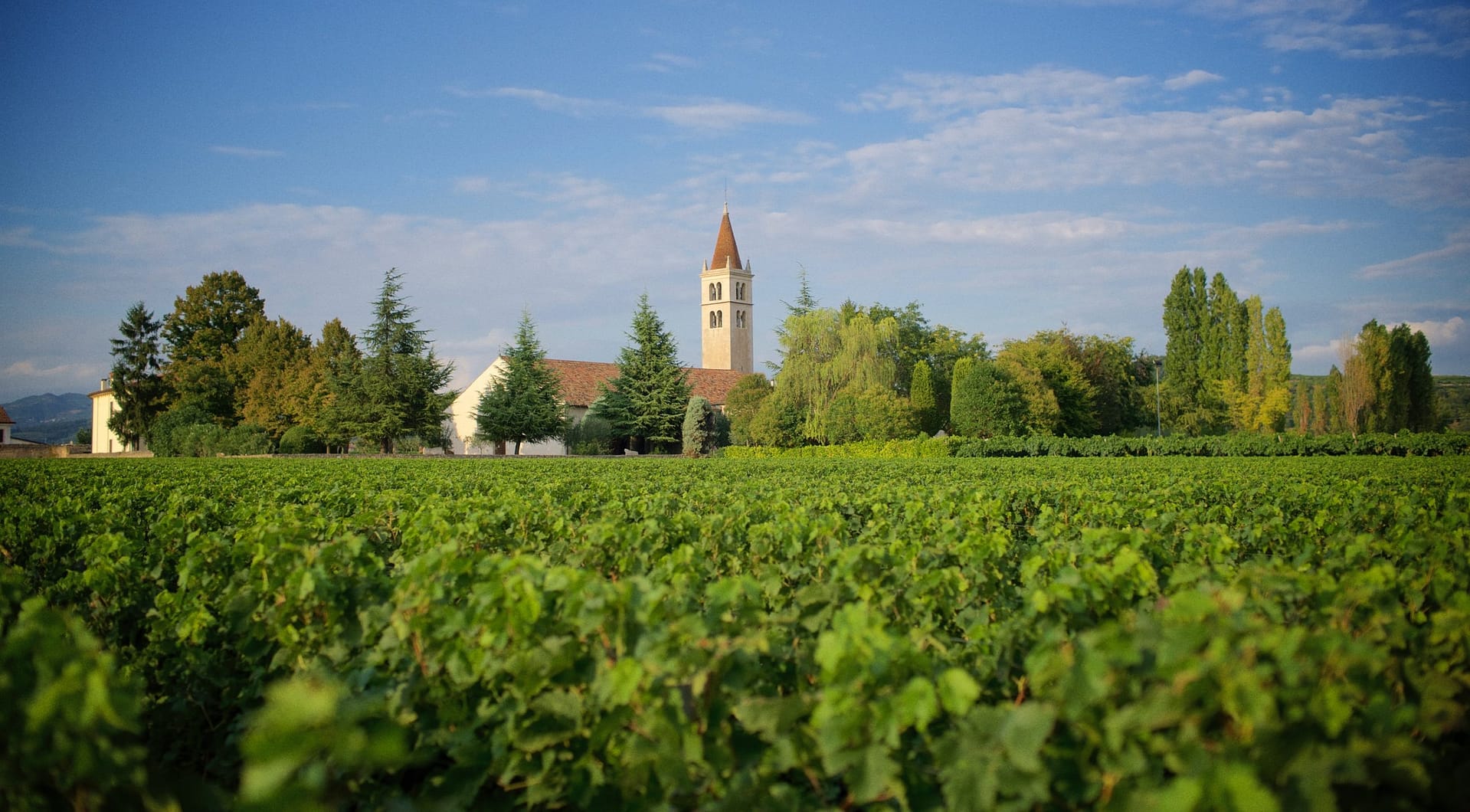
Tenuta Santa Maria alla Pieve, Gaetano Bertani’s estate in Colognola ai Colli, is where the Bertani family’s connection with Soave first took shape. Acquired by the family in the first half of the nineteenth century, the estate lies in the southernmost part of Val d’Illasi, between the Valpolicella DOC and Soave DOC areas, and is where the winery’s first Soave made entirely from Garganega grapes was produced. Today, that tradition lives on in Lepiga Soave DOC, a cru produced from one of the denomination’s oldest vineyards and interpreted according to a philosophy that combines longstanding traditions with a profound respect for the unique character of the terroir.
Tenuta Santa Maria alla Pieve stands along the route of the ancient Via Postumia, the Roman road that connected Genoa to Aquileia via Verona. The estate, comprising 22 hectares of vineyards, probably still follows the boundaries of the Roman centuriation system, as suggested by fragments of Roman cadastral records discovered in Verona. The property also borders the namesake Sanctuary of Santa Maria della Pieve in Colognola, built on the site of a Roman temple decorated with vine leaves and grape clusters—further evidence of the area’s ancient winemaking vocation.
Beneath one of the estate’s vineyards, a Neolithic village was unearthed, while traces of a Roman settlement were discovered beneath another; both finds were verified by the archaeological authorities through dedicated excavations. Over the centuries, the complex has passed through several eras and served a variety of purposes: first as a fortified Scaliger outpost, then as an Olivetan monastery, and later as General Masséna’s command post during the Battle of Caldiero in 1805, before eventually becoming the family winery devoted to white wines.
It was here, in the first half of the nineteenth century, that the Bertani family began producing its own Soave, making the most of Garganega grown on exceptionally limestone-rich soils, ideally suited to white wines, and in a climate moderated by mountain influences from Val d’Illasi. Over time, a massal selection was developed and continues to be preserved today, forming the genetic heritage of the historic vineyard. Its vines, now between 68 and 70 years old, have been included by Jancis Robinson in the Old Vine Registry as some of the oldest in the entire region.
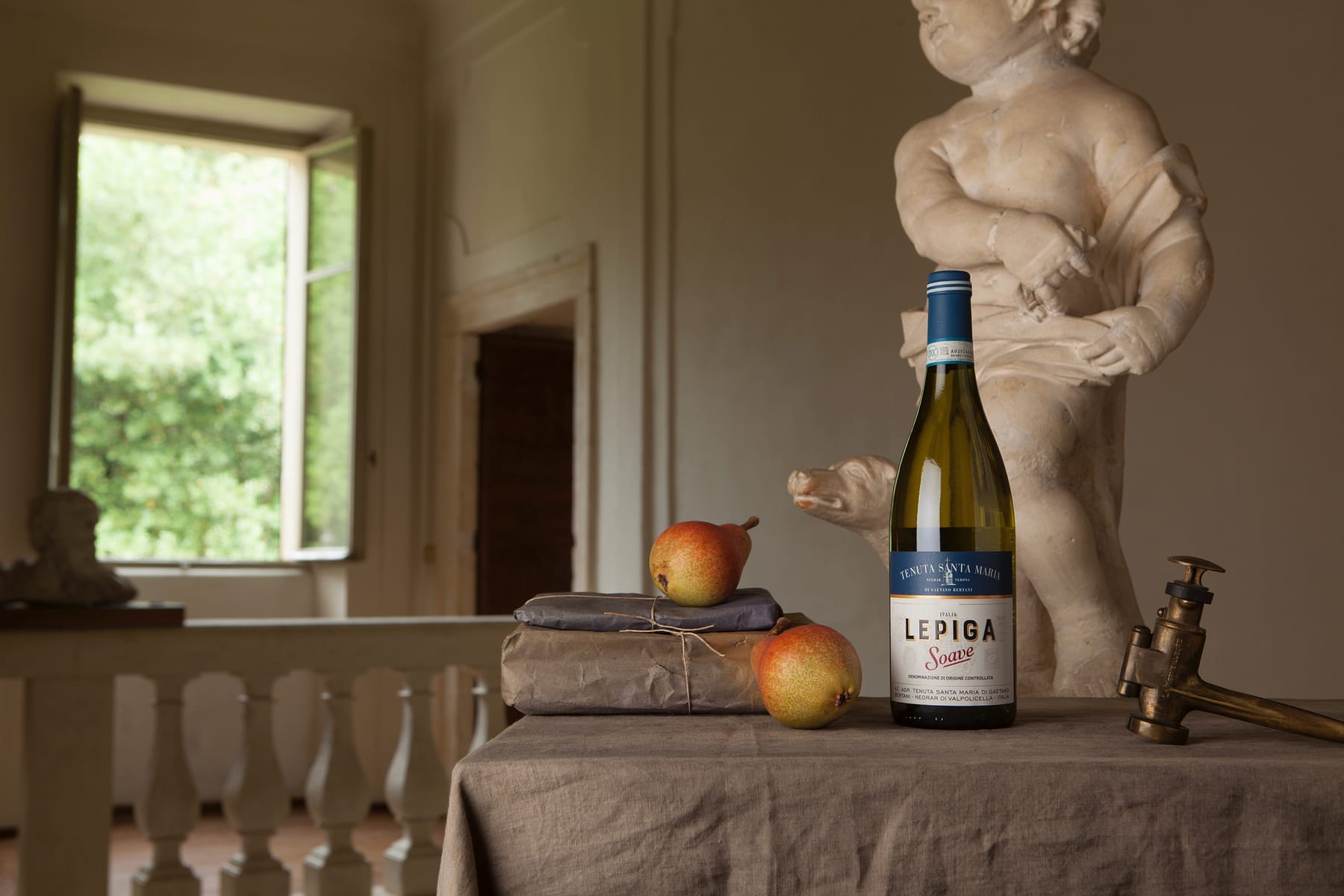
This vineyard gives rise to Lepiga Soave DOC, a single-vineyard wine made exclusively from Garganega that interprets its terroir through agronomic precision and patience. Harvesting is carried out entirely by hand in three separate passes, following the different stages of grape ripening: the first preserves freshness and acidity, while the later passes seek full ripeness and complexity. The different lots are vinified separately after a brief cold maceration, followed by fermentation in temperature-controlled stainless-steel tanks at 16–18°C. The lots are then blended and undergo extended ageing on the fine lees with bâtonnage, giving the wine structure and depth without compromising its aromatic purity.
The result is a focused, mineral-driven white wine, defined by savoury tension, depth and elegance, authentically expressing the character of the estate’s limestone soils and capable of standing alongside the great crus of Soave and Europe’s terroir-driven white wines.
The development of Tenuta Santa Maria alla Pieve also continues the path begun by Gaetano Bertani in the 1990s. After almost forty years of Amarone Classico harvests, driven by a desire to reconnect the family with the history that had linked it to France since its nineteenth-century exile, and inspired by his passion for Chardonnay and Merlot, Gaetano travelled to France to consult the nurseries that, at the time, were considered benchmarks for many of the country’s great crus.
Following extensive studies of the soils and microclimate, high-density vineyards (9,000 vines per hectare) were planted in 1991 and 1993. Today, these vineyards produce Torre Pieve, Chardonnay IGT Verona, whose name recalls the aforementioned Romanesque parish church, and Decima Aurea, Merlot IGT Verona, named after the milestone marking the tenth mile of the Via Postumia from Verona. Alongside these varieties, a Syrah vineyard was also planted—the first of its kind in Verona—and today its grapes are a key component of the Pragal IGT blend, together with Corvina and Merlot. Even in this experimentation with varieties far removed from Verona’s traditional grapes, the estate applies the same approach that now guides its work with Garganega: always begin by understanding the place, even before considering the grape variety.
Today, Tenuta Santa Maria alla Pieve stands alongside Tenuta Santa Maria, the Bertani family’s historic estate devoted to the great wines of Valpolicella. Together, the two estates founded by Gaetano Bertani and now led by his sons Giovanni and Guglielmo preserve two distinct yet complementary identities: Amarone on one side, Soave on the other, with its historic vineyards, massal selections and a terroir whose identity has been intertwined with viticulture for more than two thousand years—a heritage of which Lepiga is today the most authentic expression.